YouTube Marketing for Law Firms: The Ultimate Guide (2026)

What do the biggest law firms on the internet have in common?
They all leverage video content to build their online presence.
Heading into 2026, the world’s marketers already accepted that video is the content format of the future. And in a trust-based industry like legal, adopting video marketing just might be the advantage you need to level up your firm.
In this post, we’ll guide you through the complexities of video marketing on YouTube, AKA the largest video-sharing platform on the web.
Let’s jump right in.
Benefits of YouTube Marketing for Lawyers
- Forge personal relationships with prospects: Publishing video content puts a face on your law firm’s brand identity, which is crucial for building trust. Various video formats also unlock opportunities to directly engage your audience, like podcasts, Q&As, and webinars.
- Galvanize brand awareness and lead generation: Publishing high-quality videos that address common questions in your legal practice will improve your law firm’s visibility in search engines, especially for queries that include video results. Not to mention you’re tapping directly into YouTube’s massive user base (over 2.85 billion monthly active users in 2026.
- Showcase your expertise: With such high stakes, you can bet that potential clients will go beyond ads and search results when researching lawyers they can trust. Proving your expertise through informative video content will help you capture their interest enough to land a consultation request.
- Educate prospects before the first call: Videos make it easier for the non-legal crowd to understand and remember complicated legal concepts. This can make the intake and onboarding processes smoother, should they decide to work with your team.
- Differentiate your firm from competitors: Using video content as the building blocks of your digital marketing will definitely help your firm stand out. With the right tactics, it can paint your firm as an approachable team that understands and resonates with the communication preferences of tech-inclined prospects.
Video Content Types for Law Firms
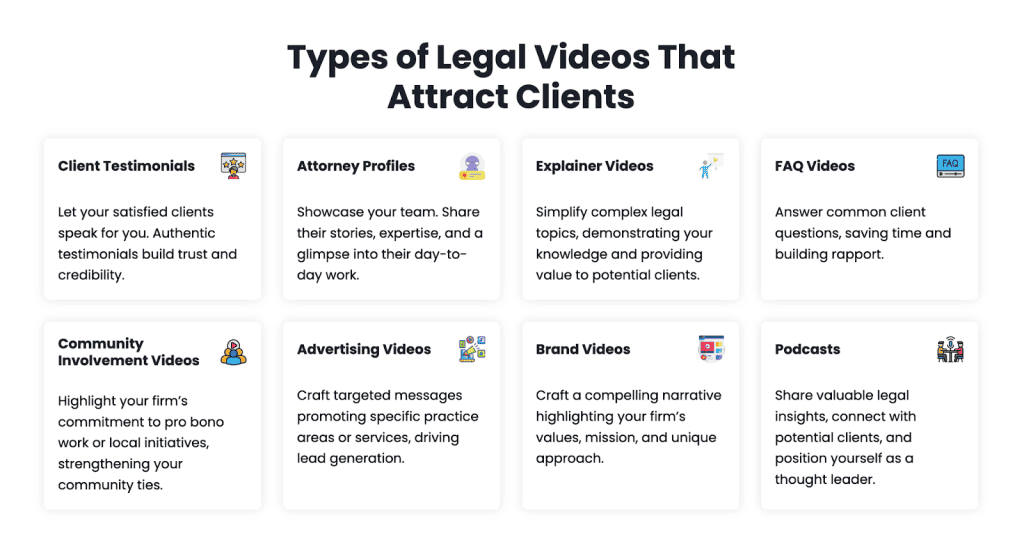
The first step in building a successful YouTube marketing campaign is to understand the go-to video content types for lawyers.
Explainer videos
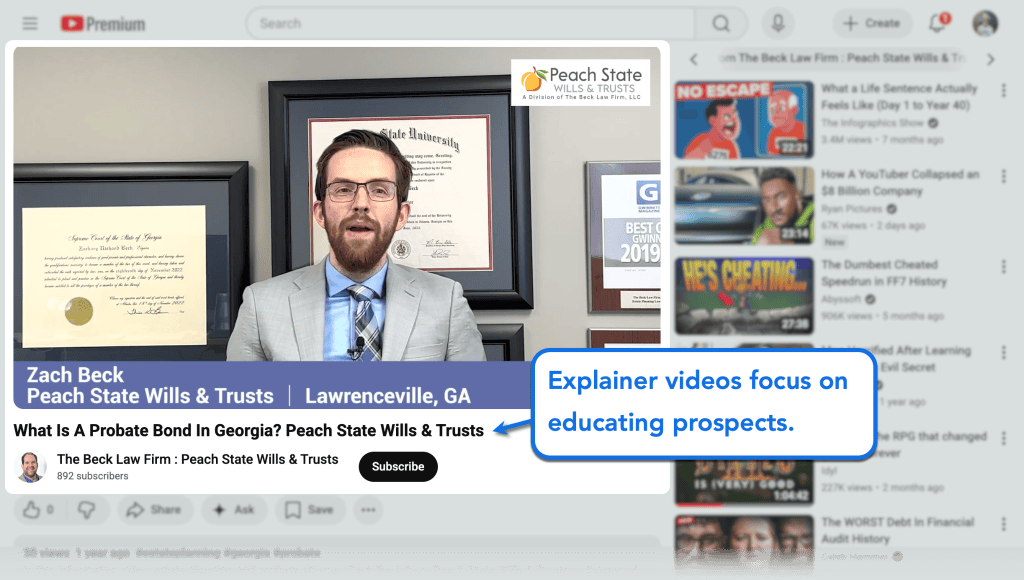
Explainer videos are as straightforward as you can get in terms of YouTube content for lawyers.
They accomplish three things: Showcase your expertise to potential prospects, attract leads who look for trustworthy firms, and maximize your YouTube visibility by targeting popular keywords or questions (i.e., “what is” keywords).
Q&A clips
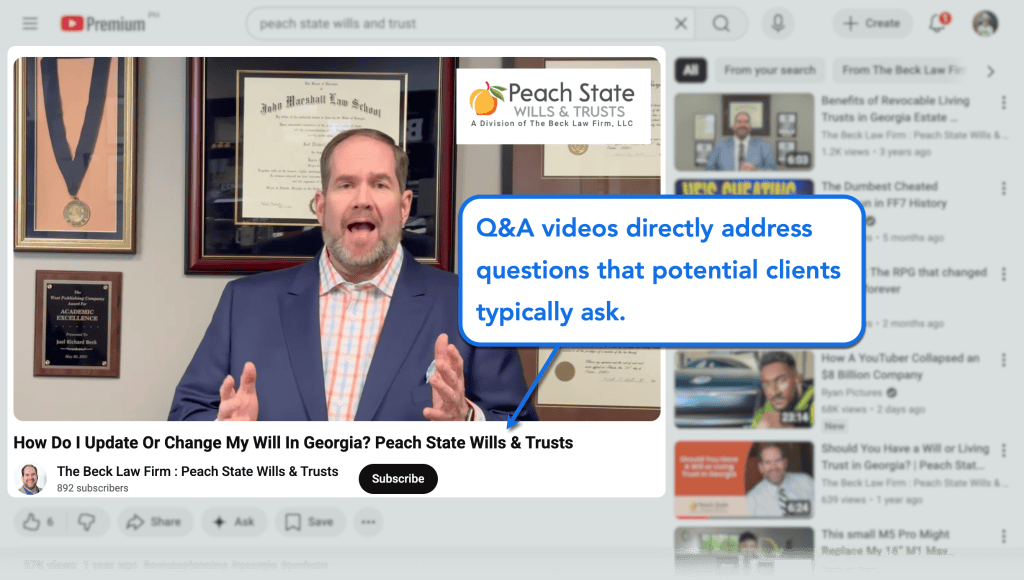
A Q&A video can be done in two ways.
For one, it can focus on answering a single question that potential clients usually ask. And for another, it could answer multiple questions that your attorneys receive through email, in-person conversations, or via the comments section.
Either way, the goal is to build rapport by demonstrating your willingness to engage your core audience and provide guidance.
Expert & client interviews
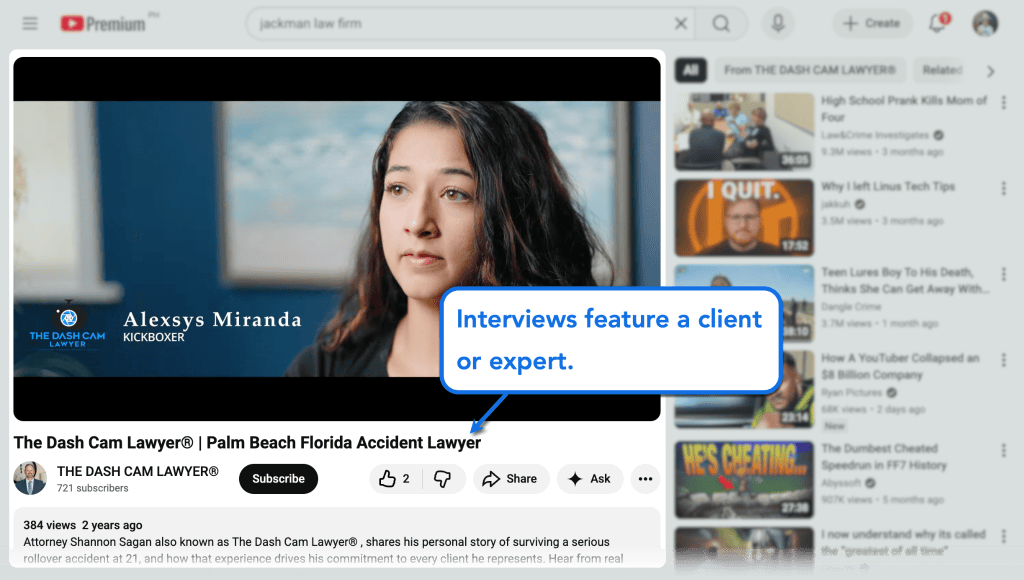
Interviews primarily feature another individual (or individuals) who can provide a unique, personal perspective or tidbits of expertise to viewers.
For instance, interviewing an expert not only injects value into your video that other competitors may not have. And if you interview someone popular, you get to leverage their online reach and authority to drive views to your video.
Interviewing clients or victims, on the other hand, provides potential clients a look at what to expect. Depending on the interview’s topic, it can also prove that your firm is capable of producing great results for clients.
Information nuggets
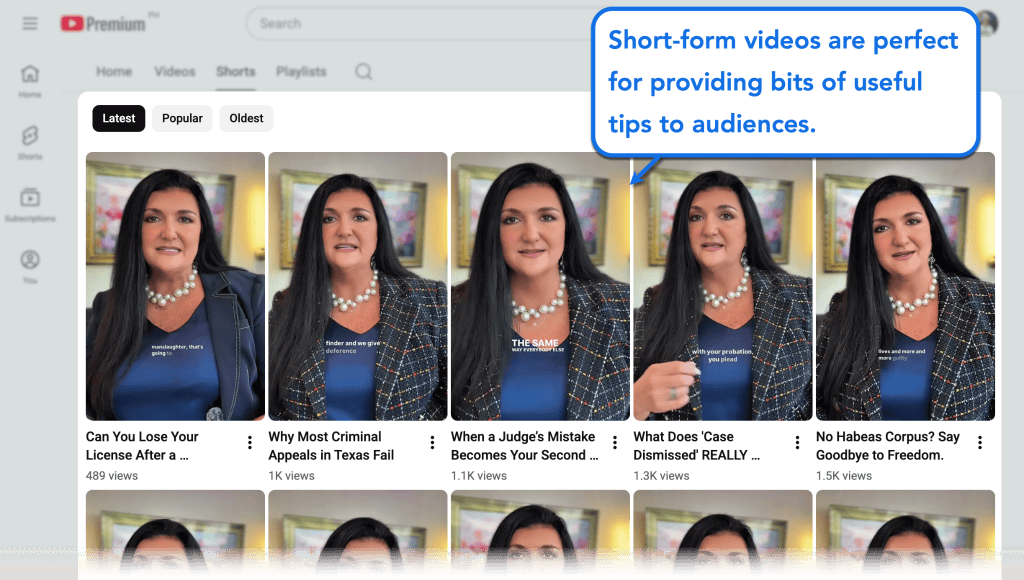
Short-form video is the ideal format for sharing nuggets of legal wisdom. It can be about the news, legal myths, or tips that other lawyers generally don’t talk about.
This type of video is appealing to potential clients who need quick and direct information, particularly those who enjoy scrolling through multiple videos in one browsing session.
They’re also relatively easy to create. You just need a smartphone with a decent camera, a topic in mind, and the confidence to communicate your message effectively.
Reaction videos
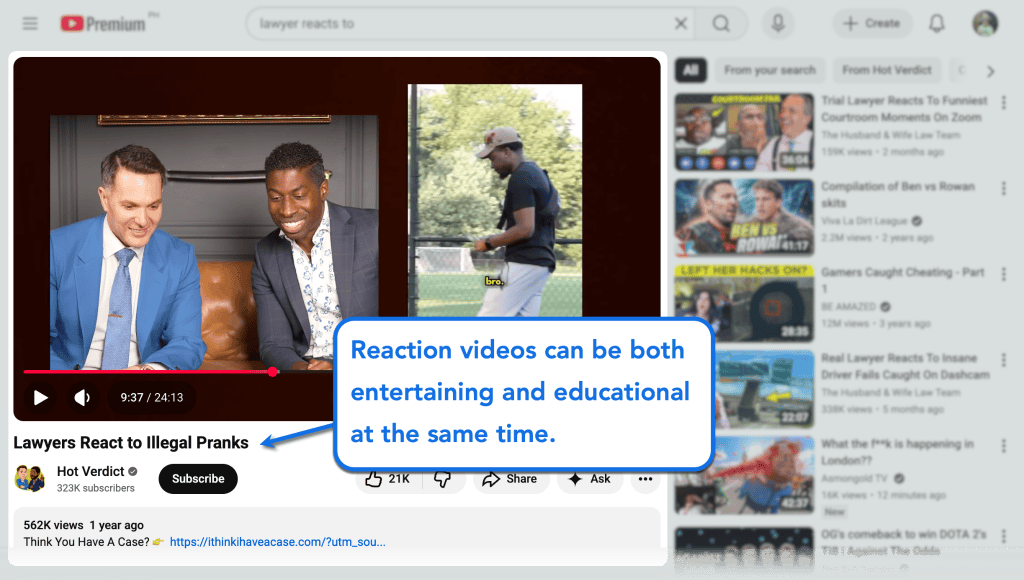
Reaction videos can garner thousands of views on YouTube, especially if you focus on a popular topic like a high-profile legal case, viral video, or anything that can get clicks.
However, it’s more practical to center your efforts around events or topics that warrant legal clarification. This will attract curious viewers looking for an attorney’s take or input.
YouTube Marketing Tips & Strategies for Law Firms
Now that you know the different videos formats lawyers can use on YouTube, you probably already have a few ideas in your head on what to do next.
But before you make your move, here are 13 crucial tips you should remember:
1. Invest in Basic Video Equipment & Space
When it comes to short-form videos, any modern smartphone with a good camera is enough, ideally something that can capture videos in 4K.
What you definitely need to invest in is a clean recording space, lighting, and high-quality audio recording equipment. This will have a substantial impact on the quality of your video content, especially if you’re publishing on YouTube, where viewers often use tablets and even full-size TVs.
2. Establish a Consistent Posting Schedule
Whatever you do, don’t publish your videos on YouTube all at once. They’ll end up competing against each other for the audience’s limited time and attention.
Rather, set a schedule that pushes out 1-2 videos per week. This will give you enough time to polish everything while making sure your followers receive enough content to keep your firm top-of-mind.
To maintain a consistent schedule, you can use the built-in scheduler on YouTube Studio.
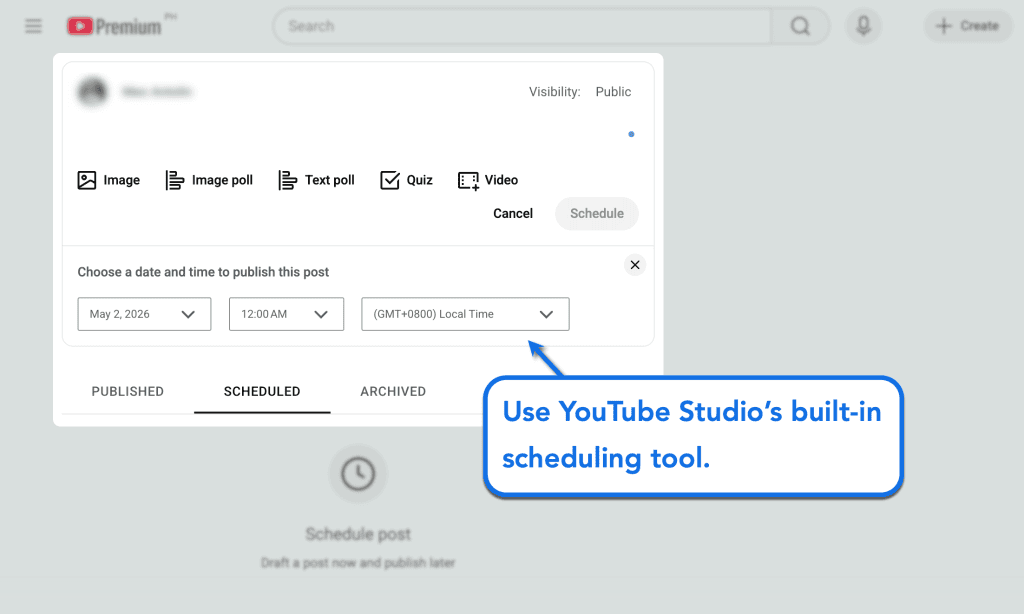
Alternatively, consider investing in dedicated Social Media Management (SMM) tools like Hootsuite or SocialBu. This will enable you to schedule your YouTube content alongside posts on other social media platforms.
3. Repurpose Content
Content repurposing is the practice of taking segments of an existing post and repackaging them as something new.
On YouTube, this can mean using parts of your existing video to create shorter clips (for YouTube Shorts and other short-form video platforms) or cutting bits of visual content and pasting them on a new YouTube video.
Creating shorter clips out of an existing post is a convenient way to squeeze the most value out of your video creation efforts. You’re essentially getting more content to publish on other platforms without having to create videos from scratch.
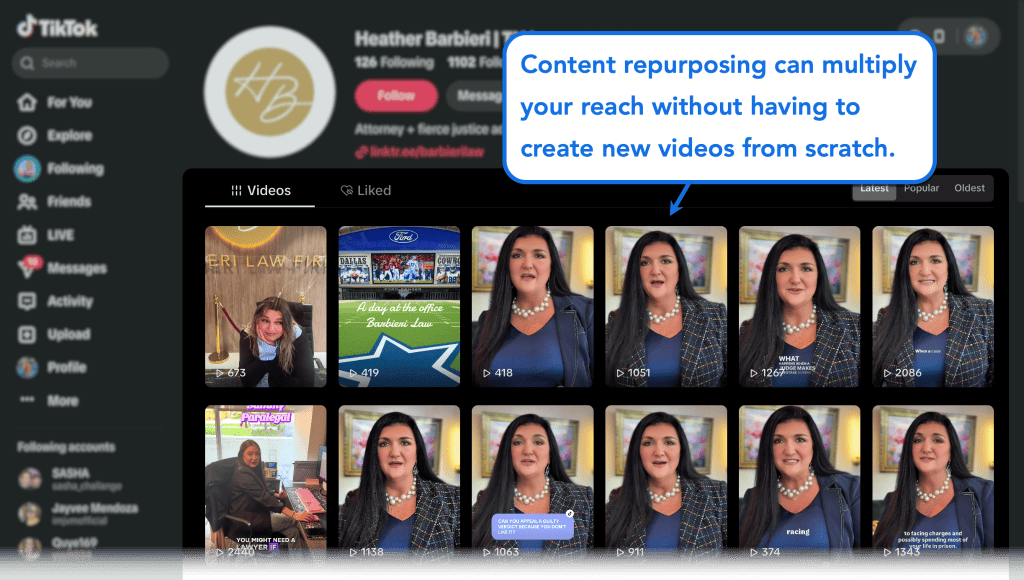
On the other hand, you can also take elements from other content and use them in your YouTube video. This can be a data visualization, infographic, presentation slide, or clips from another video or podcast recording.
4. Cross-Promote Videos Across Channels
Speaking of content repurposing, sometimes you don’t need to make modifications to spread your videos through other networks.
All you need to do is use YouTube’s built-in sharing tools, which can be found directly below your video.
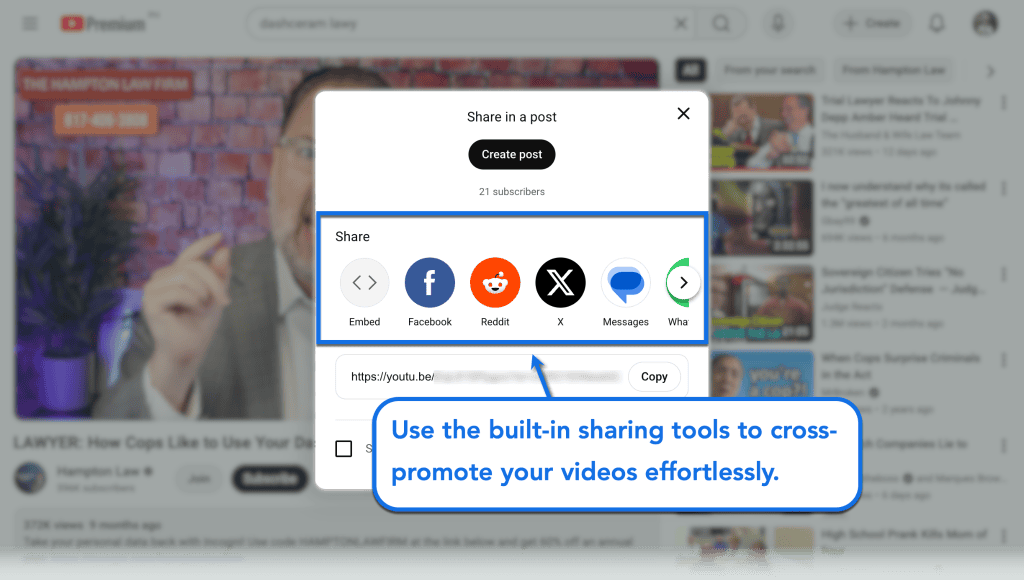
Just remember to optimize your video’s thumbnail to grab attention, whether or not the user has auto-play enabled. It also helps to write a caption that can pique their interest.
5. Invest in the Right Video Editing Tools
While preferable, modern video editing tools don’t require any technical knowledge or skill. You can still produce professional-looking videos using pre-built templates and AI tools.
Here are some of the tools you can use without needing a professional video editor’s help:
- InVideo: Comes with an AI assistant for creating entire video drafts using prompt-based instructions.
- Canva: While primarily a graphic design tool, Canva’s template library makes it perfect for quick videos for promotions, announcements, and mini Q&As.
- CapCut: A popular tool with a user-friendly interface, including one-click tools like automatic captions and video effects.
6. Optimize Videos for YouTube & Google Search
Just like website content, videos on YouTube can also be optimized to become more discoverable in search results.
It also starts with a well-crafted, high-intent keyword strategy. The standard approach is to use YouTube’s autocomplete suggestions to research high-demand keywords relevant to your practice.
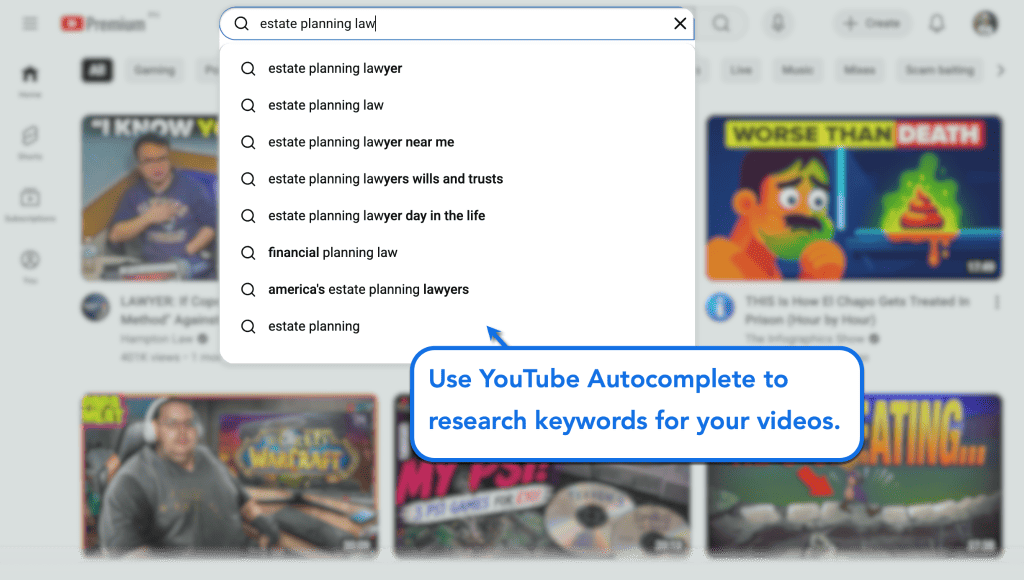
Below are the different ways to optimize for your chosen keywords on YouTube:
- Consider tools like Ahrefs and vidIQ to find high-volume YouTube keywords.
- Include your primary keyword in
- Research with secondary keywords that relate to the same topic and include them naturally.
- Refine captions to ensure accuracy and proper keyword mentions (YouTube scans and indexes this text).
- Focus on creating a quality video with hyper-local signals (i.e., location-specific terms) to hold engagement.
7. Implement Consistent Branding
Make each video unmistakably “yours” by incorporating consistent branding elements, like your logo, brand colors, typography, and terminology.
This will not only make your YouTube aesthetics appear more uniform.
By strengthening your brand identity and recognizability, you also enhance performance metrics that ultimately impact your search rankings. This includes your video Click-Through Rate (CTR), shares, watch time, and Call-To-Action (CTA) clicks.
For basic branding, use YouTube Studio’s customization options to set your banner image, links, and video watermark.
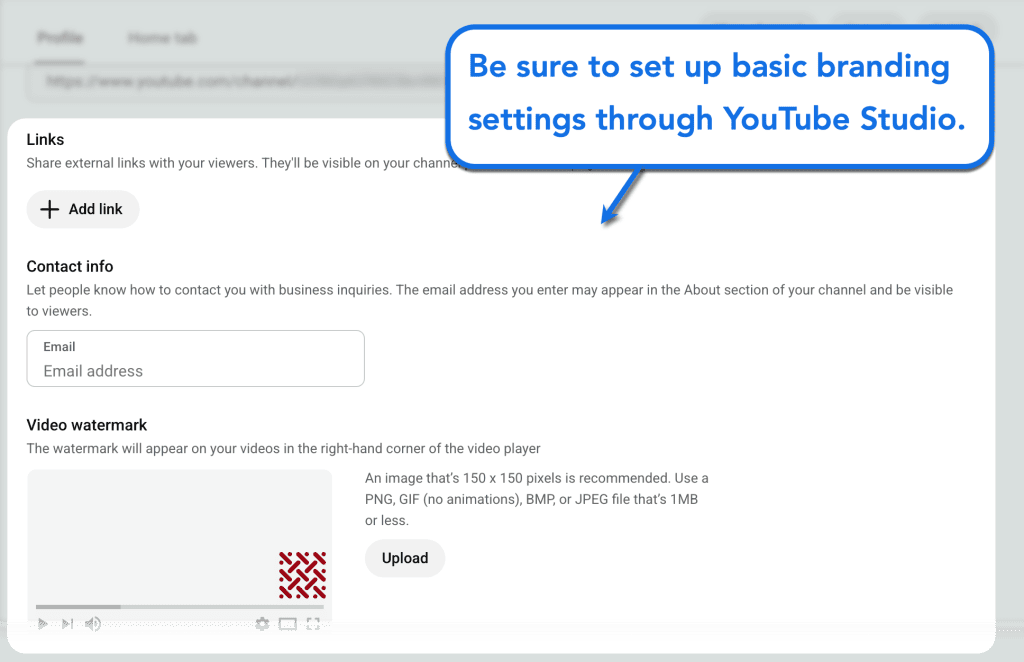
For more consistent branding across multiple social media networks, use a tool like Canva, Kittl, and Visme.
8. Incorporate Strong (but Ethical CTAs)
Instilling strong CTAs into your YouTube marketing strategy is a great way to turn views into measurable business outcomes for your firm.
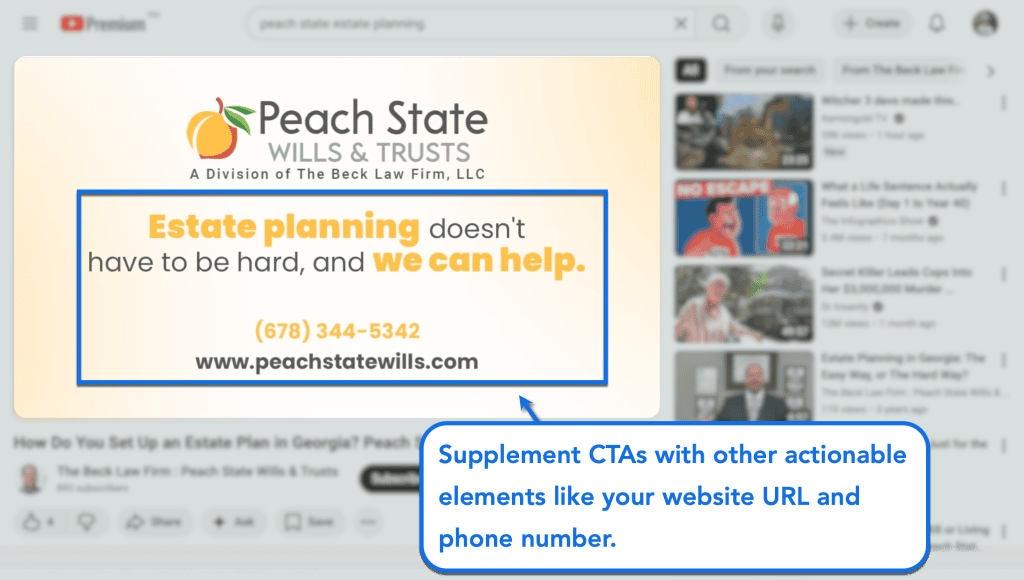
In videos, CTAs can be presented verbally or by using an on-screen visual element. Utilizing both ensures you get the message across and convince more viewers to click.
Don’t forget to include other actionable elements, like your website URL, phone number, and other useful contact details.
Also, remember that law firms are held to higher standards in terms of professionalism and advertising conduct.
Here are the advertising guardrails you need to remember:
- Avoid misleading or false claims: Whatever you do, don’t exaggerate statements, make up facts, or guarantee results.
- Always include proper identification and disclosures: Never attempt to hide the fact that your videos are made and published by a law firm (make sure details like your firm’s name, address, and contact information are easily visible).
- Maintain client confidentiality: Avoid showing use cases, case studies, or testimonials unless you have express consent in writing.
- Avoid biased comparisons: Do not make comparisons that blatantly position your firm as “superior” to competitors.
9. Look Into Video Promotions
Want a quick and surefire way to reach more potential clients on YouTube?
By setting up YouTube promotions, you don’t need to go through the whole process of optimizing and tirelessly promoting videos to gain views. Just link a Google Ads account, specify your advertising goal, define your targeting settings, and set your budget.
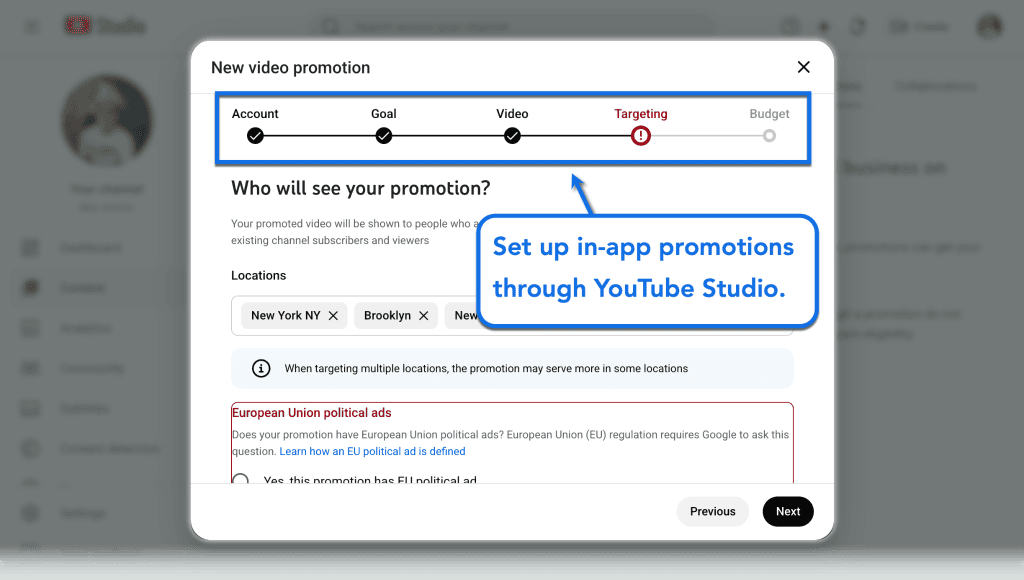
YouTube Studio promotions use a Cost Per View (CPV) pricing model. At the end of the setup process, you’ll be given an estimate of the views you’ll acquire based on your budget.
10. Interact & Engage Your YouTube Community
Law firm YouTube marketing shouldn’t be a one-way street.
If you want to maximize the returns from all the effort you put into your videos, you shouldn’t put the community-building aspect on the back burner. Make them feel like a valuable member of your community, and they’ll help prop up your brand’s authority over time.
An excellent starting point is to give your audience base a name.
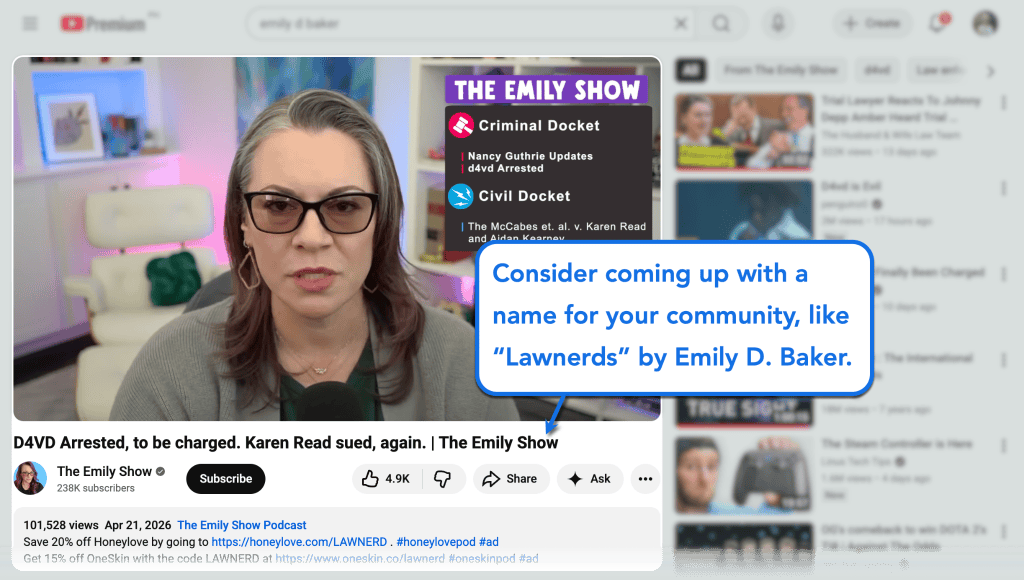
Of course, this is just a stepping stone towards a tightly-knit community of loyal viewers.
Even small changes can make a huge difference when building a community and winning their trust.
For example, make sure you directly address your viewers when speaking in your video. Also, make it a point to encourage viewers to leave comments, actually read them, and leave helpful responses.
11. Analyze Your Competitors
If there are companies that figured out the YouTube marketing puzzle, that would be your top competitors. More specifically, the popular law firms in your practice area that thrive on YouTube.
Analyzing their channel can reveal ideas and strategies that can elevate your own YouTube presence. Pay close attention to their topic choices, video formats, scripts, branding elements, and even their publishing frequency.
Of course, you shouldn’t aim to copy their YouTube marketing strategies outright.
Instead, you should aim to outperform and outshine them at every opportunity.
Make your videos meatier. Improve upon the visual elements, clarity, and the way you respond to comments.
Remember, the goal of competitor analysis in any area of marketing is not to be a copycat. It’s to identify your competitor’s strengths and turn them into your advantage.
12. Track YouTube Analytics
Nobody, not even the most experienced video marketers, can achieve perfect results without a hitch.
There will be challenges keeping you from achieving your YouTube channel’s full potential. And how you track and overcome these challenges will determine the outcomes your firm can attain.
That’s what YouTube’s built-in analytics are for.
On your channel dashboard, look for the dedicated ‘Analytics’ tab. The report should tell you everything you need to know to get a handle on your channel’s performance.
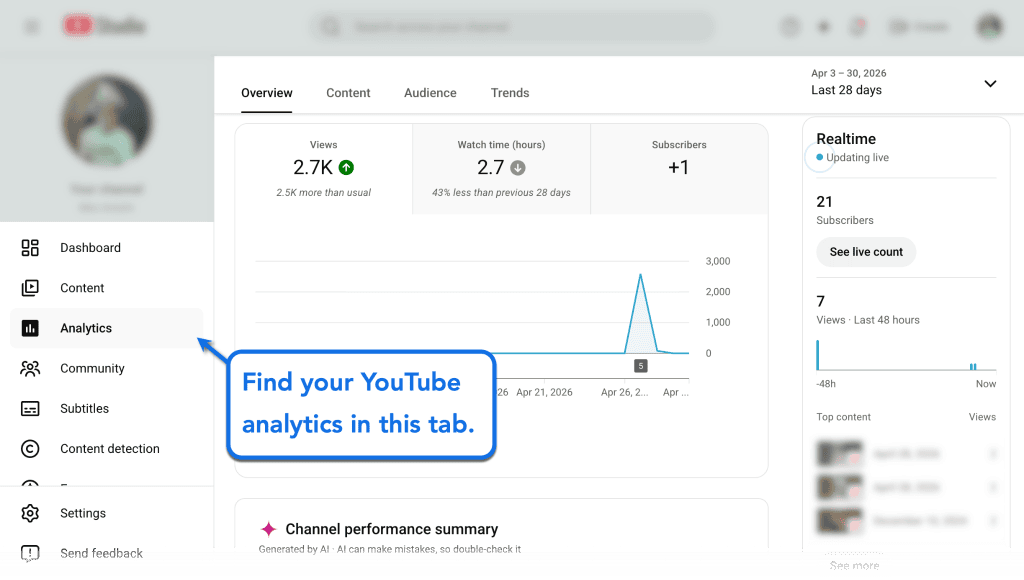
Reviewing your analytics can be the best thing you can do for YouTube marketing; that is, if you know what to do with your data.
For starters, it will pinpoint your winning content strategies, as well as the ones that underperform. This will help you reallocate your YouTube content creation efforts and resources into future projects that are more likely to generate positive results.
Monitoring your analytics is also essential if you wish to test new tactics, be it in your content or user engagement strategy. With YouTube Studio’s analytics dashboard, track Key Performance Indicators (KPIs) like the average view duration per post, new subscribers generated, live view count, and more.
13. Work with Video Marketing Agency
YouTube marketing isn’t typically a part of a lawyer’s repertoire, and that’s fine.
While there are tons of guides and tools out there that can help, nothing beats experience and a fully-stacked team of professionals when it comes to getting top-tier results.
That’s why the biggest law firms on YouTube almost always have the backing of a seasoned team of video marketers.
As a rule of thumb, only consider freelancers or agencies with extensive, verifiable history in the legal space. Check case studies, reviews, and real-world examples to assess if they’re the right fit for your goals.
Learn more about what to look for in a video marketing agency for law firms here.
YouTube Channels to Follow for Law Firms
Need ideas to get your firm’s YouTube channel off to a running start?
Before we wrap up this post, here’s a quick list of some of the biggest lawyers, law firms, and legal channels you should check out:
- LegalEagle
- Law & Crime Network
- The Lead Attorney
- Lawyer You Know
- Emily D. Baker
- CLR Bruce Rivers
Final Words
YouTube marketing for law firms isn’t easy, but anyone can definitely start with the right guidance.
The article above should lead you in the right direction in terms of what video formats to use, the best ways to get viewers, how to grow your channel, and more. But none of the tips above will make a difference if you don’t take your first step.
Here’s a suggestion: Let experts learn about your firm and provide you with a roadmap to YouTube success. Get in touch with us here, and let’s figure out your law firm’s YouTube marketing together.
Related Post
-

The Ultimate Guide to Lead Generation for Family Law Firms (2026)
One of the main challenges of running a family law firm is getting high-quality leads. For most firms, this can be a highly stressful and… -

10 Best Video Production Agencies for Attorneys in 2026
In law firm marketing, video content is proven to be the superior format in terms of user engagement, potential reach, and conversion rate. Remember, videos… -

Content Marketing for Law Firms (+ Real World Examples)
These days, traditional advertising is like trying to win a case with only circumstantial evidence – it might raise eyebrows, but it won’t seal the…