The Ultimate Guide to Immigration Law Firm Marketing & SEO

Immigration legal matters carry intense personal stakes and tight regulatory deadlines. Whether an employer needs a key executive transferred or a family faces an unexpected deportation notice, prospects search online under heavy pressure and uncertainty.
Acquiring these leads requires a clear digital strategy built around client trust and search intent. Your firm must demonstrate expertise the moment an applicant or business owner starts searching for help.
We’ll help you navigate through these challenges in this guide.
Creating the Right Website Structure
Your immigration law firm website serves as the foundation of your marketing.
It’s the main pillar of your online marketing and SEO efforts, where prospects learn more about your firm, initiate contact, and become clients. This process is easily disrupted if your site structure has confusing navigation, irrelevant content, and usability issues.
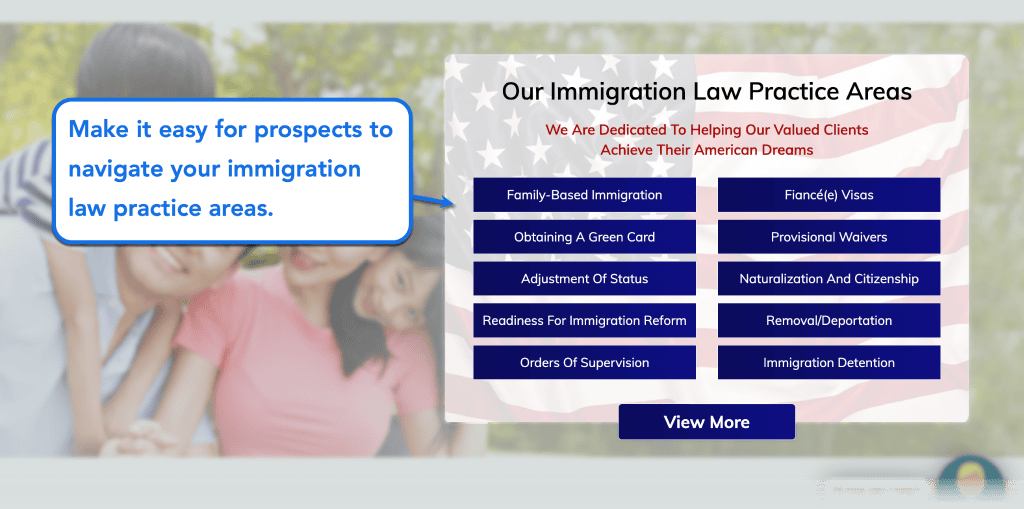
Organizing Service Pages Into Categories
One of your top priorities is to make the right information easy for potential clients to find.
Set up clear subfolders for family petitions, business sponsorship, humanitarian relief, naturalization, and other immigration categories or client goals. Make sure prospects can easily navigate across these pages through your menu structure and navigation elements.
Creating Distinct Pathways Based on Client Type
A company HR manager and someone applying for asylum only have different legal needs and behaviors. That said, your main navigation should split individual and family needs away from business services right at the top.
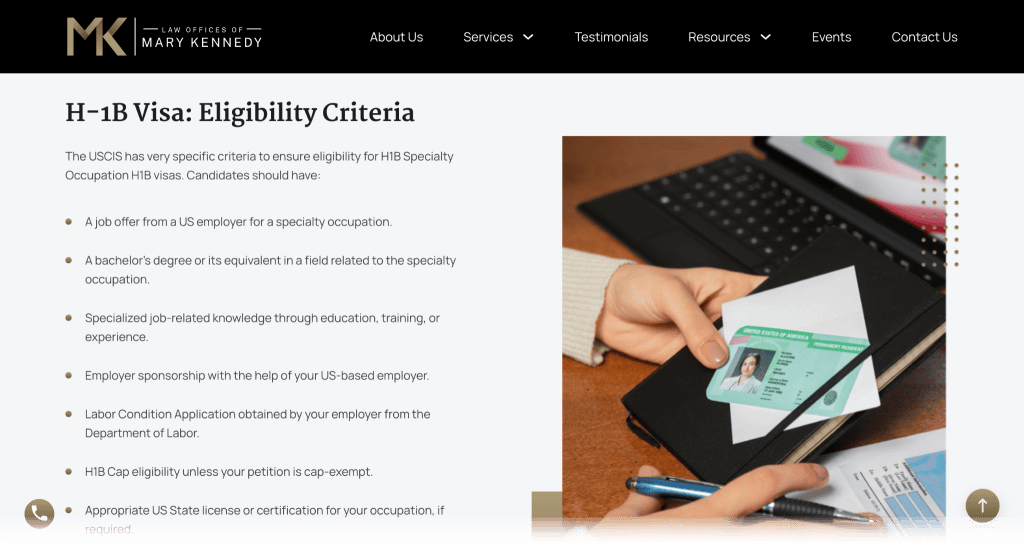
An employer checking out H-1B options needs a clean experience that covers compliance, timelines, and retainer structures.
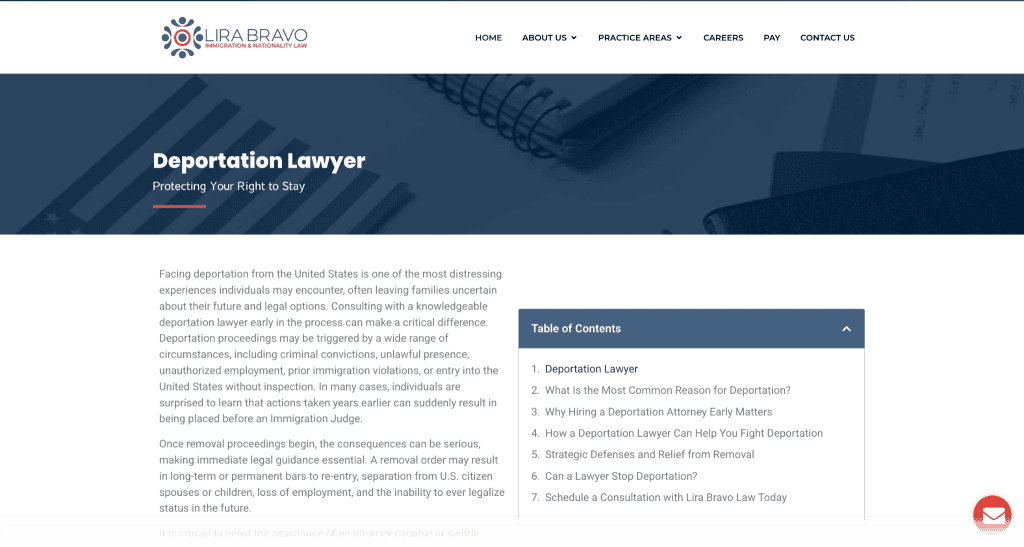
Whereas someone facing urgent removal proceedings needs an immediate way to connect with an intake team.
The goal is to avoid funneling all your website traffic into the same path.
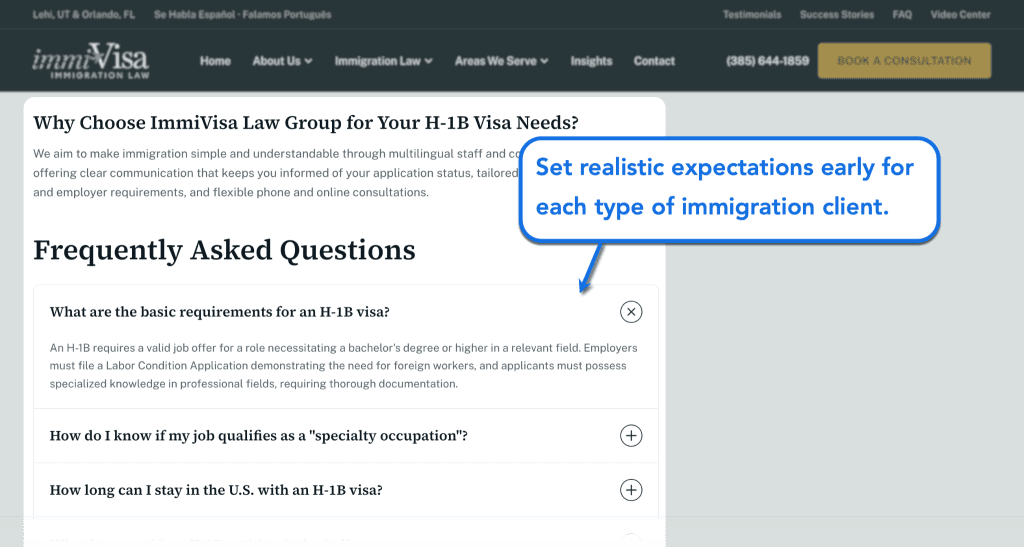
Lay out useful information for each audience type, including consultation eligibility requirements (e.g., documents, fees, and timelines) as well as current pricing models and realistic processing expectations where appropriate. This sets real expectations and clarifies the next steps for potential prospects.
Implementing Multilingual Accessibility Features
Given the nature of immigration law, your firm needs to put in extra effort to implement multilingual features on your website.
Most people prefer reading online content in their native language, especially for complex topics like immigration law. This helps build confidence and reduce friction early in the client journey.
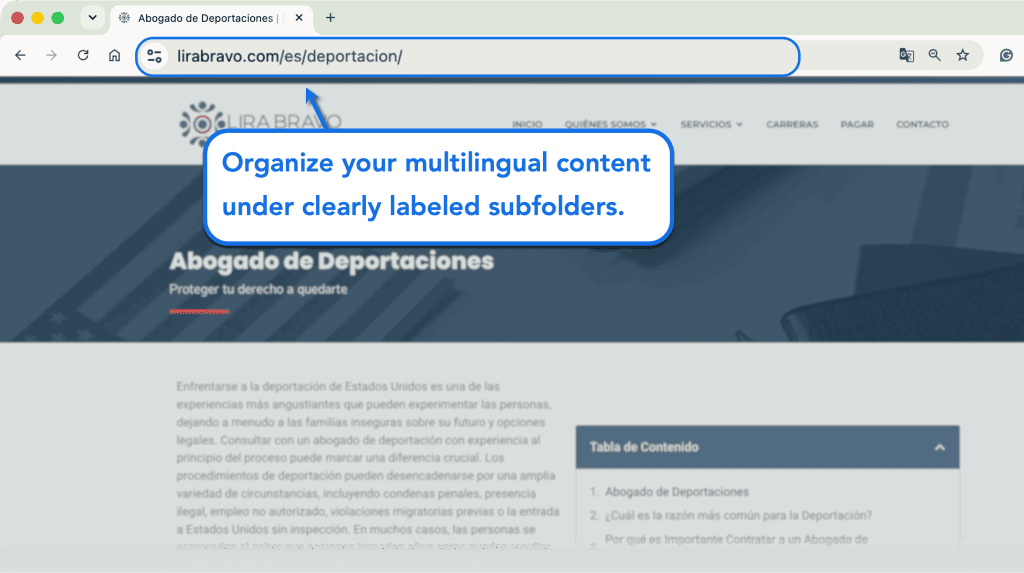
Get your menus, contact forms, and Call-To-Action (CTA) buttons translated by real humans for the main languages your target audience speaks. You should also organize multilingual pages into language-specific subdirectories (e.g., “/es/”), which will help your multilingual SEO efforts down the line.
Make sure prospects can see a clear, visible way to switch to your translated pages.
Automatic translation plugins and tools may mess up legal phrasing. This causes unnecessary confusion and a terrible experience for non-English users, which is why it’s recommended to work with professional human translators instead.
Optimizing Your Website for Mobile Displays
Mobile devices consistently account for more than half of internet traffic.
As a rule of thumb, always build your immigration law firm website with mobile responsiveness in mind. This automatically adjusts page elements to adapt to the user’s screen size.
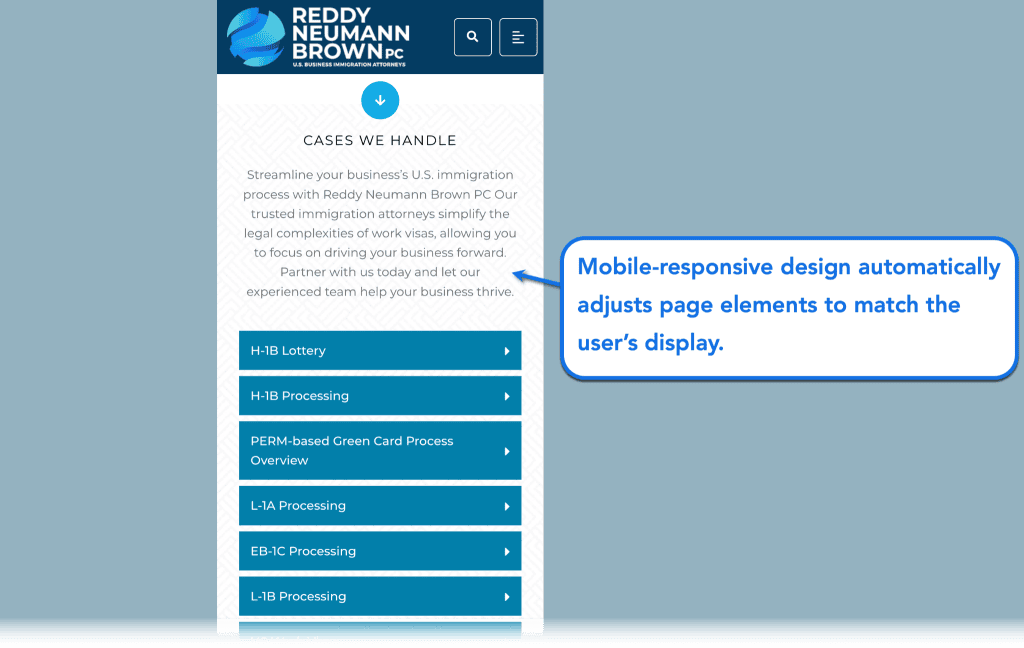
Below are additional mobile-friendliness optimization tips:
- Use larger text size to improve readability on smaller displays.
- Increase the size of clickable elements (e.g., CTA buttons and menus).
- Avoid large pop-ups that take up screen real estate.
Tip: Use a tool like Google Lighthouse to identify accessibility and usability issues on both mobile and desktop devices.
Building an Internal Link Network
Guide visitors through your website by linking pages to relevant content, including guides, contact forms, and other useful resources. For example, a page on marriage-based green cards should point directly to an article on how to prove a valid relationship.
Not only do internal links improve the user experience, but they also help search engines determine the relationship between pages and your website’s overall structure.
Building Trust with Immigration Clients
Winning an immigration case requires deep client confidence from day one.
A simple oversight on an application or a missed cutoff can lead to deportation proceedings, separate families, or wreck an employer’s hiring plan. Visitors need to see real competence before they decide to book a call.
Highlight Credentials That Matter
Having an active law license isn’t enough to earn trust.
You need to highlight active involvement in specialized groups, such as the American Immigration Lawyers Association (AILA), which demonstrates a true commitment to the field. These can be presented on your homepage (solo lawyers) and/or your attorney bio profiles.
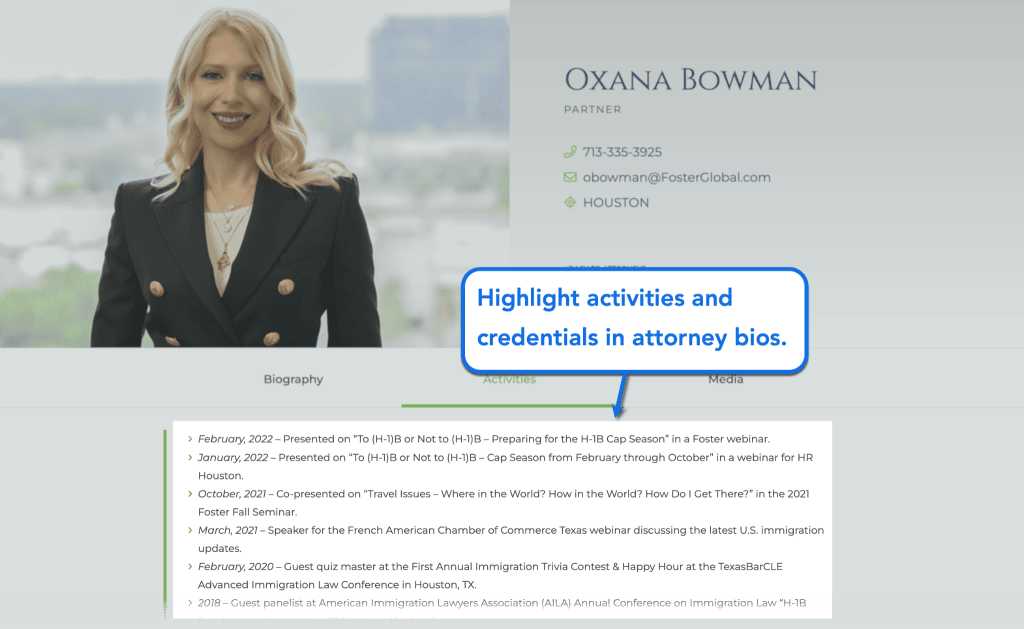
In addition to your legal education, it also helps to feature local news interviews, legal articles, speaking engagements, and other associations. When people see major outlets quoting your team on immigration law, they’ll feel much better about hiring you.
Other law firm authority signals you should highlight:
- Board Certifications
- Years in practice
- Milestone metrics (i.e., number of corporate visa applications handled)
- Peer honors
- Multilingual capabilities
Show Real Proof of Your Work
Prospective clients want evidence that the firm has handled similar immigration matters.
Publish anonymized (to align with confidentiality and advertising rules) case studies focusing on complex legal hurdles, your tactical approach, and the outcome.
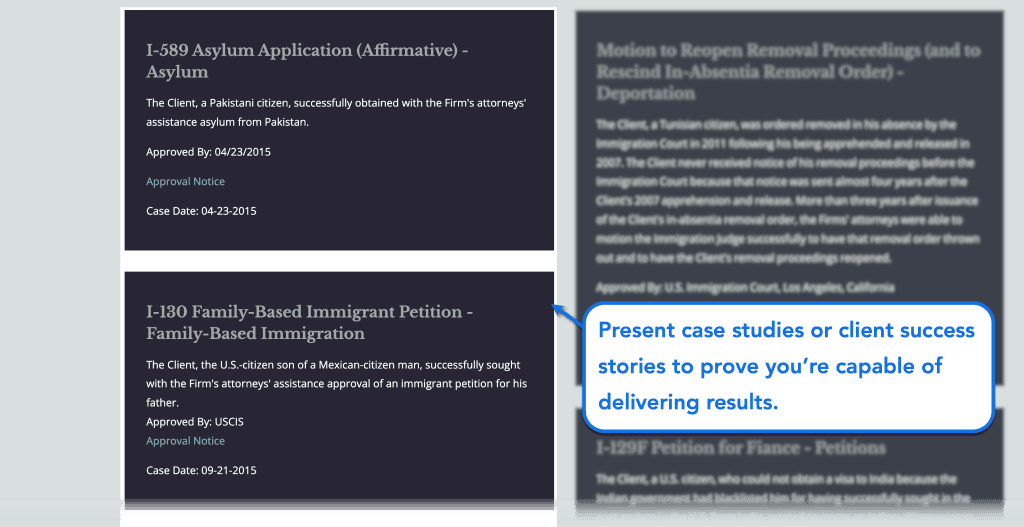
For business clients, highlight successful audit defenses or effective handling of time-sensitive H-1B matters. Make sure to include clear disclaimers explaining that past court wins or approvals do not guarantee positive outcomes for all prospects.
Tip: Inspire confidence by ditching legal codes and other government jargon. The more you help potential clients understand their case, the more they’ll trust your firm.
Be Completely Transparent About Risks and Timelines
False promises severely damage a firm’s reputation and invite bar investigations, even when it comes to your timelines.
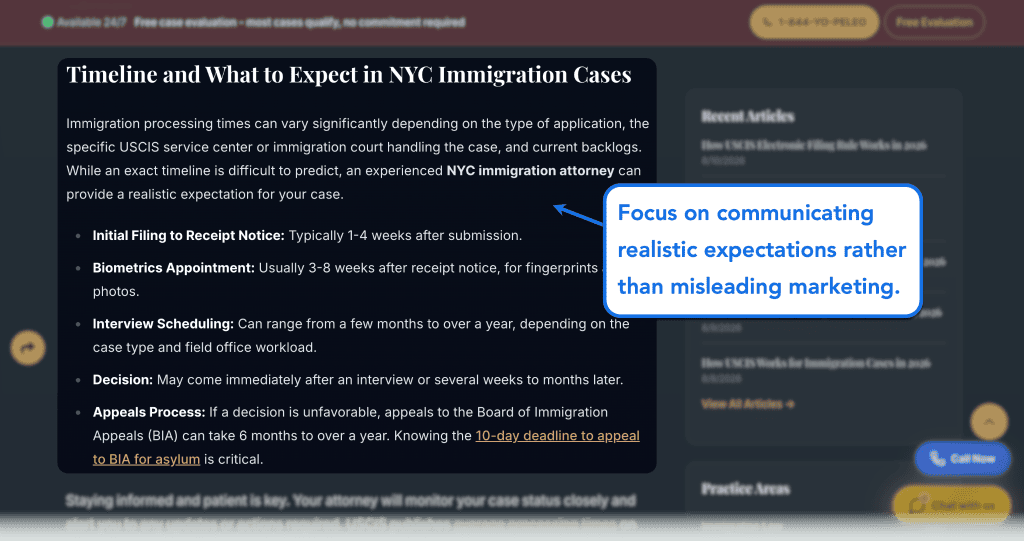
Remember, federal agencies like the U.S. Citizenship and Immigration Services (USCIS) move at their own pace. Promising or implying something like “quick approval” can be misleading.
The same goes for guaranteeing positive outcomes or claims like “best immigration attorney.” Instead, talk about realistic agency delays, backlog realities, and other potential obstacles that potential clients should prepare for.
Refer to the American Bar Association (ABA) Model Rules of Professional Conduct for more information on ethical compliance for law firms.
Immigration Keyword and Content Strategy
In SEO, broad terms are highly competitive and difficult to monetize, especially since they don’t always align with specific client needs.
Prospects often want practical information about eligibility, timing, or application steps. As such, your keyword and content strategy should revolve around these real issues, not just broad searches like “immigration attorney.”
Grouping Keywords by Situation
Someone Googling marriage-based green cards isn’t the same as someone facing a removal hearing.
When conducting keyword research, group them under categories such as visa type, immigration goal, legal issues, and stage of the process. Use keyword research tools like Ahrefs or Semrush to expand seed terms (i.e., “deportation defense”) into related keyword ideas.
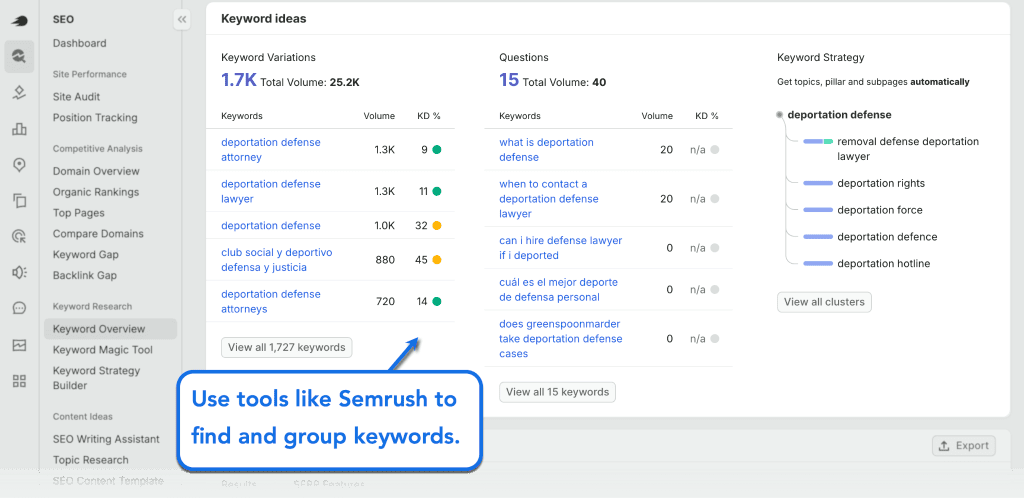
These keyword groups also help split content into their own categories as well, be it about citizenship, humanitarian, employment, or family-related immigration issues. It’s recommended to use a keyword tracker that organizes your keyword groups and the content topics that align with them.
Write For The Question, Not The Keyword
Keywords help with content discovery, but people search with a problem in mind.
They want to figure out eligibility, documents, timelines, fees, interviews, denials, appeals, and policy shifts. Your content needs to address the question with actionable insights, not just explain the keyword’s literal definition.
For example, someone Googling about work permits or authorizations already knows what they are. What they want to know is how to get them.
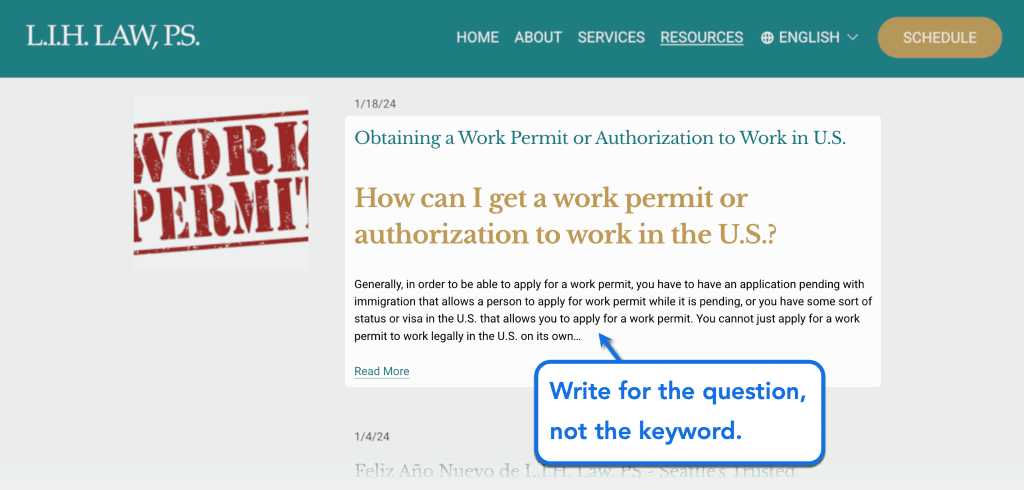
Although helpful, avoid prioritizing broad travel and government-form topics that tend to attract low-intent traffic. While they might be useful if they’re highly relevant to your firm’s services, these topics often attract users who may be curious about certain laws but have no intent to hire an immigration attorney.
Instead, here are high-priority concerns your website content should address:
- Eligibility requirements → “What are the Eligibility Requirements for H-1B Visa?”
- Required documents → “What Documents Do You Need for a Marriage-Based Green Card?”
- Processing timelines → “How Long Does USCIS Take to Process a Family Petition?”
- Fees → “How Much Does It Cost to File for Naturalization?”
- Interview preparation → “What to Expect at Your Green Card Interview?”
- Denials → “Why Was My Visa Application Denied, and What Can I Do Next?”
- Appeals → “How to Appeal a Denied Immigration Case”
Remember, find and address the questions surrounding these topics. Don’t just publish definitions that your prospects can find elsewhere.
Additional Content Tips for Immigration Law Firms
It’s also important to update time-sensitive content as information changes. This may include immigration policies, forms, or changes to filing rules.
Publish these articles as soon as possible once the changes are confirmed.
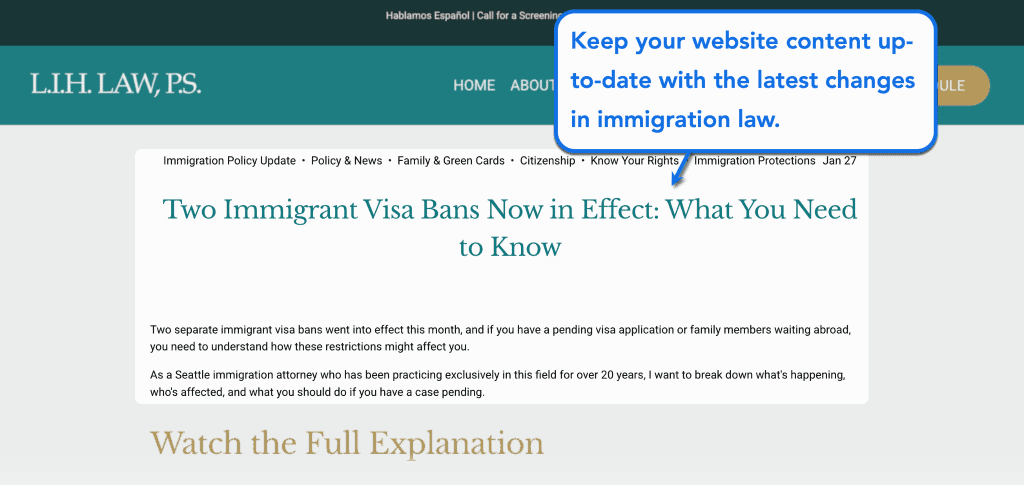
Lastly, maximize the value of your content ideas by repurposing them into videos, webinars, newsletters, or social media posts. Be sure to publish them across platforms like YouTube and Instagram to maximize reach.
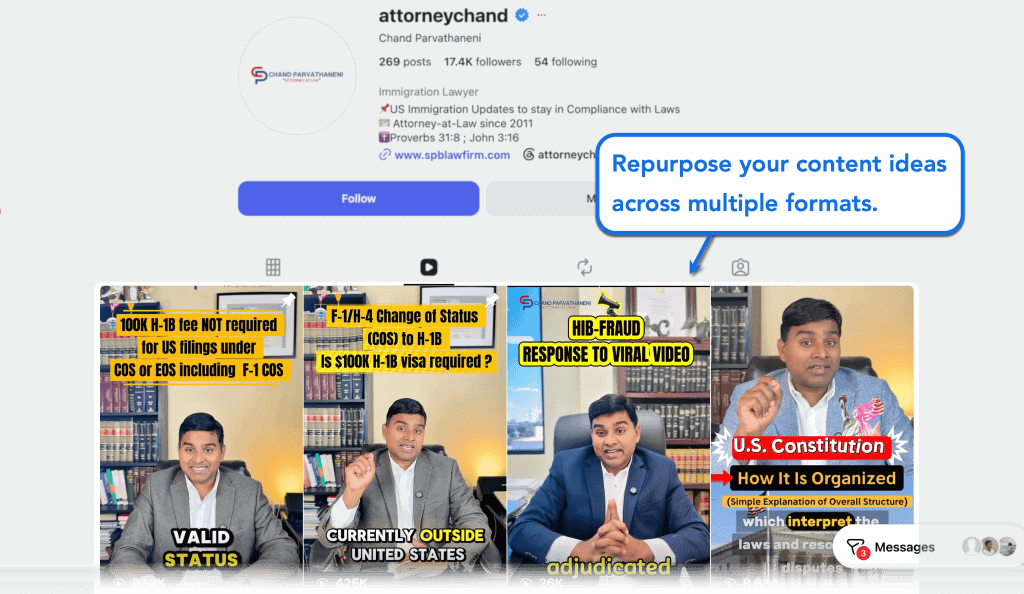
Don’t have the team or resources for a multi-format content strategy? Consider working with an experienced law firm content marketing agency to fill the gaps.
Running High-Impact Content Marketing & Education
Knowing what to write about is just half the job. The other half is actually building it out and getting it in front of the right people.
Start with Guides and FAQs
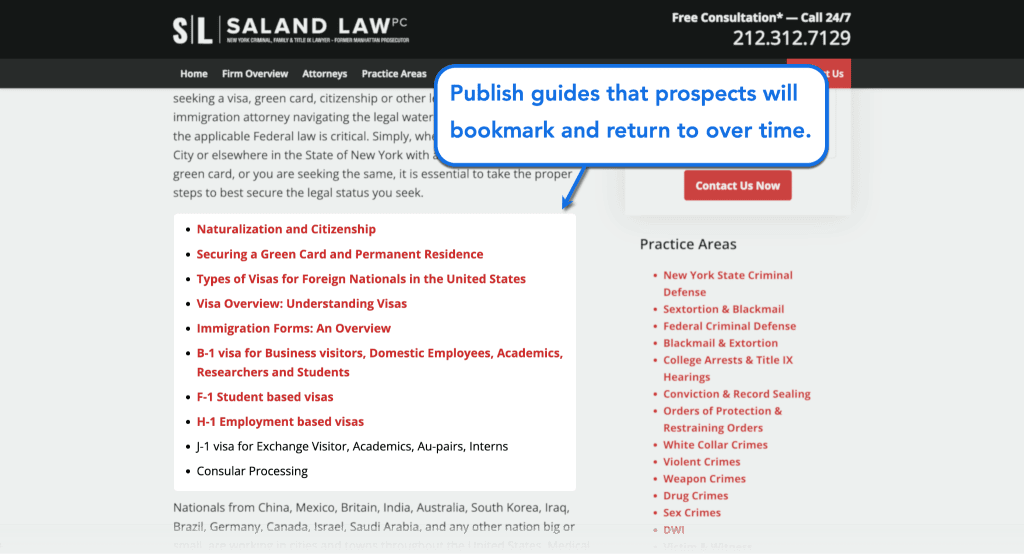
Visa guides, filing process steps, green card checklists: These are valuable content types on every immigration lawyer website.
Potential prospects bookmark these, coming back mid-application whenever they’re stuck on a form or waiting for updates. Just make sure they’re easy to find using tactics like a dedicated FAQ page, sidebar menus, and internal links.
Some essential tips when creating guides:
- Ask your intake team what questions come up most.
- Turn questions into their own FAQ; answered straight with no fluff.
- Pick your highest-volume case type and build one full guide for it.
- End every guide with clear next steps, like a form, phone number, or whatever gets someone to reach out.
- Revisit guides every few months, since forms and filing rules don’t stay the same for long.
Create Employer-Focused Content
A lot of immigration website content is written for individuals and families. That’s mainly because family-related immigration cases are significantly more common than business cases.
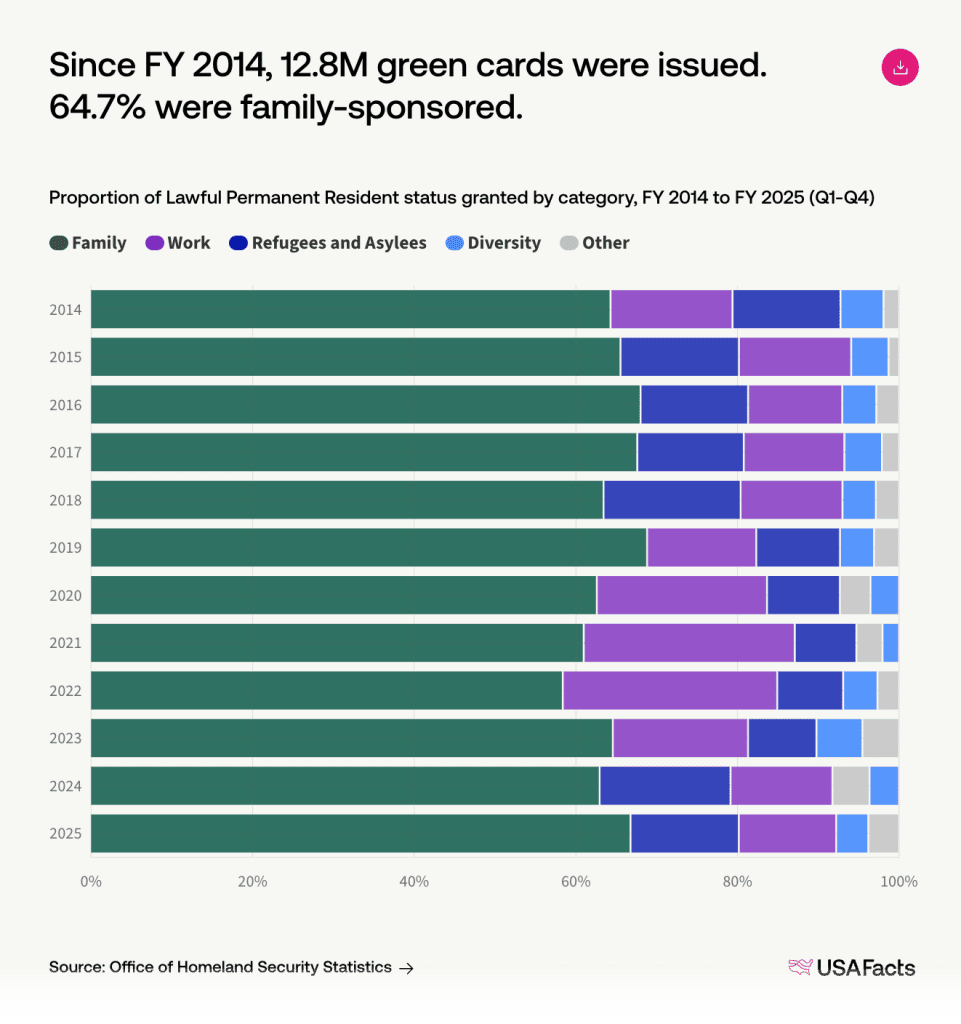
However, you’ll still miss out on a lot of high-intent traffic by ignoring employer-related concerns, like sponsorships, compliance audits, and H-1B renewals.
You need content written the way HR and legal teams communicate, not with watered-down terminology. Discuss compliance checklists, sponsorship timelines, audit walkthroughs, and other technical processes in detail.
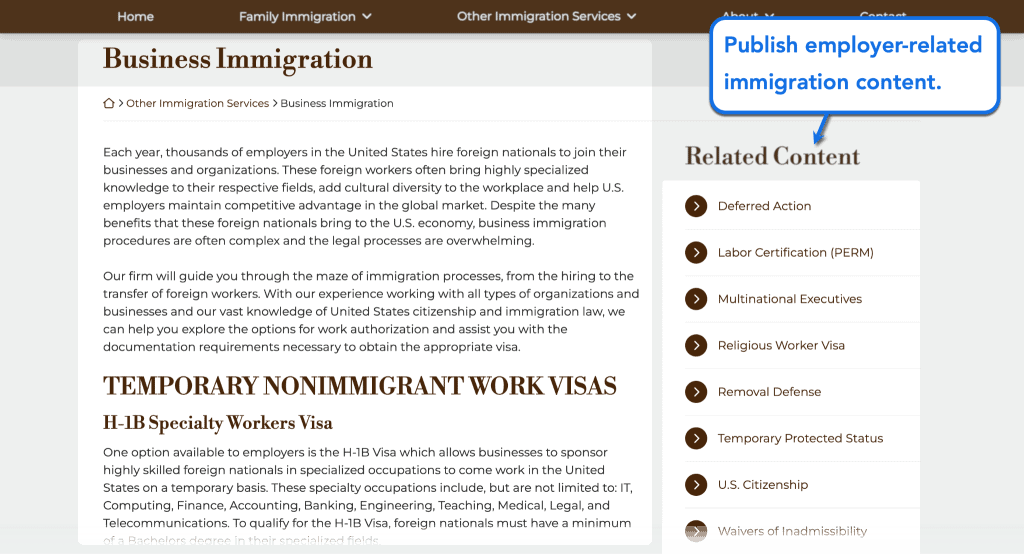
Business prospects may be fewer than families facing immigration issues, but they still represent a valuable client segment.
Of course, these pages shouldn’t just sit still on your website. Here are a few tips to increase their visibility to online prospects:
- Repurpose sections into short-form videos: Pull the most useful tips from your guides and record a 30-to-60-second clip for Instagram Reels, YouTube Shorts, and TikTok.
- Turn long-form guides into email sequences: Split up one of your solid guides and publish it as separate, sequential emails (add unique value with additional tips, new data, and personalized messaging).
- Publish business-related snippets on LinkedIn: Pull out original stats, compliance reminders, or useful tips from employer-related articles and share them on LinkedIn to reach business prospects.
- Link your content together: Create internal links between related posts to help search engines and potential clients discover useful resources on your site, like FAQs or service pages.
Building Local, Regional, and National Visibility
Focusing on your local visibility not only increases your local authority. Done right, it also puts your immigration law firm in prominent search features and tools, like Google Maps and the Local 3-Pack.
Optimizing Your Google Business Profile
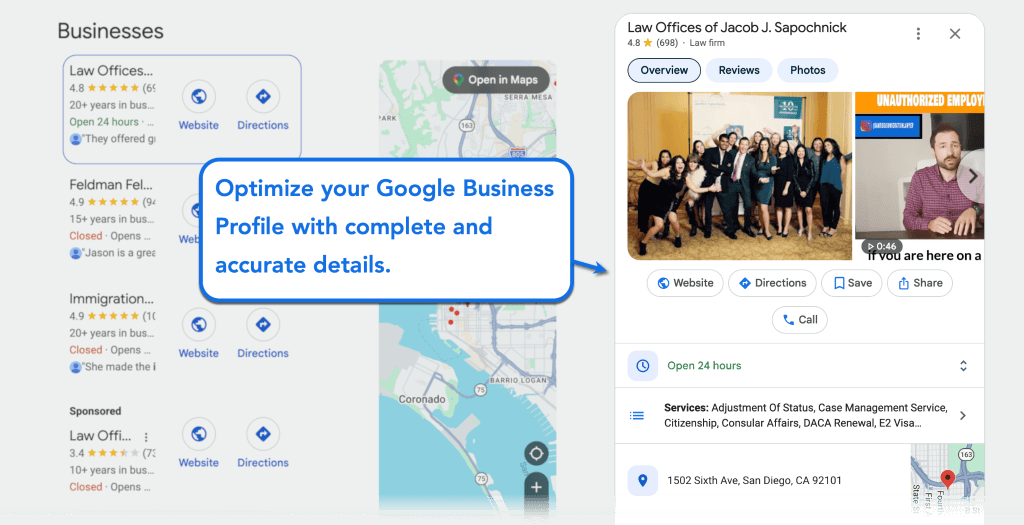
A well-optimized Google Business Profile is crucial to any law firm’s local visibility, and it should reflect the actual immigration services you offer.
Don’t just stick with a generic “law firm” label that tells nothing. Instead, build and optimize your profile with these essential tips:
- Keep your Name, Address, and Phone (NAP) details accurate: Share consistent information about your firm across your GBP, website, and directory listings.
- Fill out your service category that applies to your practice: Select “Immigration attorney” as your primary category or as a secondary category (if you’re a multi-practice firm).
- Upload photos of your firm: Communicate your team’s culture and participation in local events through high-quality images.
- Post updates and articles: Post articles or social media updates to signal high activity and establish credibility.
- List down your services: Include a complete list of your legal services (e.g., K-1 fiancé visas, permanent labor certification, green cards, and immigration programs).
Reviews also matter more in GBP optimization than most firms realize.
Encourage honest and detailed reviews about their experience working with your firm (without suggesting specific wording). These are the details other prospects search for without knowing it.
GBP also uses a star ratings system, which helps grab attention and build trust in search results.
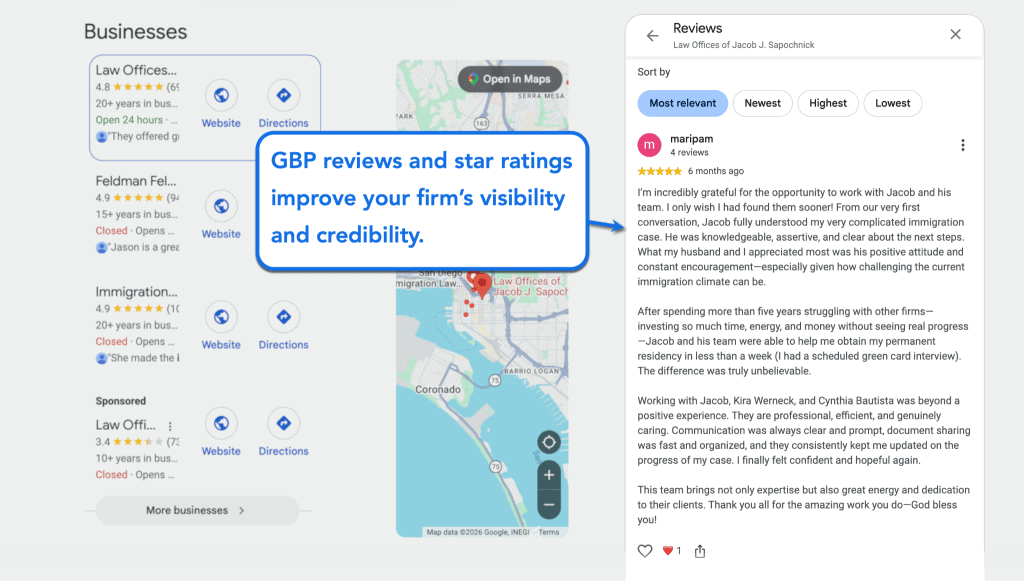
Just remember that offering incentives in exchange for reviews is generally prohibited by legal advertising ethics rules. Your state’s specific bar association and Google themselves also have rules against incentivized reviews, so be sure to review them first.
In any case, the safest approach is to simply provide an excellent service and let the client’s real experience shine through.
Building Location-Based Landing Pages
If your firm serves multiple cities, build dedicated landing pages for each one.
This increases your search visibility for location-specific queries, like “immigration attorney in San Antonio” or “deportation defense lawyer New York.”
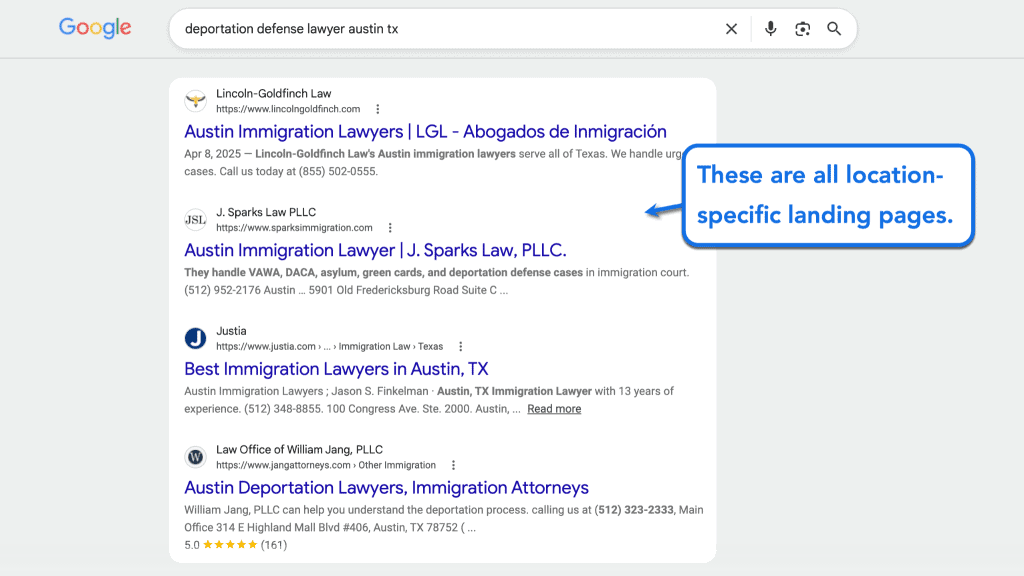
Just don’t use template-based content with just the city names swapped out. Invest in unique pages covering local court procedures, local immigration practices, interview locations, and other genuinely location-sensitive issues.
Some firms also handle statewide cases, particularly remote-friendly matters like certain visa categories. Optimize for those broader searches as well with a state-specific service page, highlighting your firm’s services and how it operates.
Building Local Backlinks and Citations
Your GBP isn’t the only listing that matters.
Build profiles in multiple legal directories, like Avvo, Justia, and FindLaw, while ensuring consistency in terms of firm name, address, phone number, and areas served.
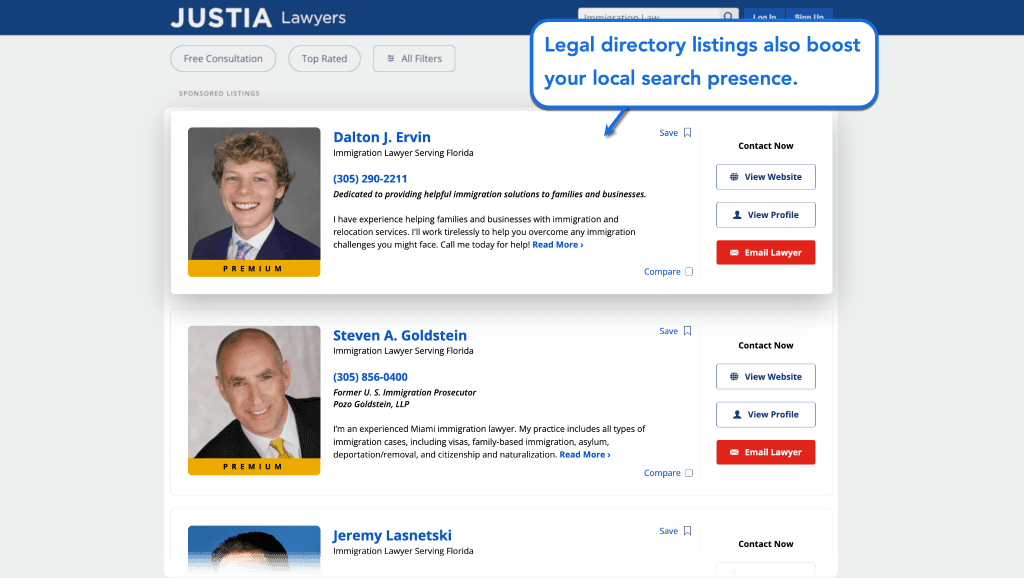
Apart from legal directories, aim to build your presence and gain links from reputable sources:
- Your local bar association website
- Immigrant support groups
- Chamber of commerce website
- Universities
- Community organizations (including Facebook groups and forums)
These connections signal that your firm is an active, legitimate part of the local community. Moreover, high-quality backlinks from these sources will also boost your search engine rankings for local queries.
Converting and Qualifying Immigration Leads
Traffic alone doesn’t mean much if your intake process can’t convert.
Remember, the pathway looks different depending on who’s calling, and that’s the first reality you need to address.
Creating Separate Intake Paths for Each Client Type
An individual facing removal proceedings and employers organizing sponsorship don’t mix in the same intake flow. You need to set up different forms, intake scripts, and specialists tailored to each group.
Sort this out at the first contact:
- Location: Identify which office, attorney, or regional resource actually fits.
- Immigration goal: Get to the right conversation quickly by identifying the prospect’s immigration concern (e.g., work visa, asylum, green card, and compliance review).
- Important deadlines: Details like filing windows, status expiration, and court dates that determine priority.
Collecting important deadlines, in particular, helps with identifying urgent cases early.
These are calls that can’t sit in a queue. Train your intake team to ask questions that flag urgency, like:
- Is anyone currently detained or facing an immediate removal date?
- Is there a filing deadline or court date coming up in the next few weeks?
- Has their current status already expired or is it close to expiration?
- Have they received any official notice from USCIS or immigration court recently?
Offering Multilingual Engagement Options
Using multilingual CTAs and forms is a great first step. Next, offer phone and live chat options in the languages your prospects actually speak.
While a real agent who fluently speaks the language is ideal, modern AI services like Smith.ai do a good job of automating initial contact 24/7.

Managing Inbound Engagement
When dealing with inbound prospects, set expectations early by disclosing what a consultation costs, which documents to bring or send, and how long the review process typically takes.
This upfront transparency quickly identifies inquiries that are ready for the next step who are intent on working with a firm, preventing you from spending time and resources on those who may drop out later on.
After the first call, route corporate and individual inquiries accordingly. Corporate leads connect to sponsorship and compliance experts, while individual cases reach staff trained in family and deportation-related concerns.
Once a case moves, track it by type and source. Identify and invest more in channels that consistently generate qualified consultations and retained matters, while dialing down on channels that consistently underperform.
Just remember that not everyone converts right away.
A short follow-up, be it through email or SMS, may help re-engage prospects who weren’t ready for the next step. If that doesn’t work, consider a more elaborate email marketing campaign.
Warming Up Prospects with Email Marketing
An email strategy keeps your firm on the prospect’s radar until they’re ready to push their case forward.
With a tool like Mailchimp, you have everything you need to design emails, build automation workflows, track email analytics, and even create opt-in forms.
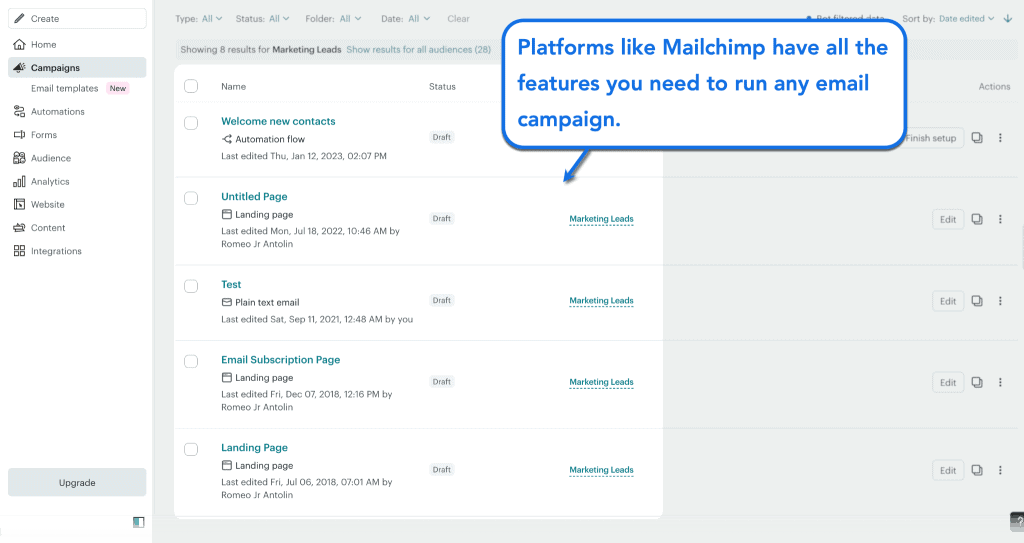
Following Up After Initial Contact
Sometimes, prospects need more than a short follow-up before their case moves forward.
Here’s a simple, three-email sequence you can try:
- Email 1 (Day 2-3): Quick reminder of what a consultation covers and its benefits, complete with a direct booking link.
- Email 2 (Day 7): Answer whatever’s probably holding them back, be it costs, lacking documentation, timelines, and expectations after booking.
- Email 3 (Day 14): One last low-pressure nudge, focusing on how easy it is to reach out.
Again, this is just an example. You’re free to adjust the schedule of each email depending on urgency and the specific matter.
Keep it short and avoid sales language. Treat it like a personal reminder with an actionable link, rather than a pitch disguised as a check-in.
There are also prospects who reach out before they’re even ready to file. They operate on their own timeline and may require additional time to gather documents and other requirements.
Keep them engaged with occasional messages instead of letting them go cold. You can send relevant policy updates, filing tips, and short check-ins every few weeks to ask if anything’s changed.
For business prospects, consider sharing upcoming webinars, legal news, and other events they might be interested in. Create a separate list from individuals who may not care about H-1B compliance updates or sponsorship deadlines.
Must-read: Email Marketing for Law Firms: Tips & Strategies
Sending Reminders That Actually Matter
Missing a deadline in an ongoing immigration case could waste months of progress.
With a modern email marketing platform, here’s a quick list of reminders worth automating:
- Document reminders: Remind prospects of the essential paperwork required to move their case forward.
- Filing deadline alerts: Share urgent notices for upcoming deadlines relevant to their case.
- Visa renewal and status expiration notices: Prevent even bigger problems by sharing renewal notices ahead of the expiration date, not on or after (adjusted based on accurate status information with attorney oversight).
Investing in Pay-Per-Click (PPC) Advertising
Organic marketing strategies like local SEO and content publishing can take months to generate results.
PPC advertising can generate visibility and inquiries faster than organic channels.
Splitting Campaigns by Case Type and Audience
Break it down into segments based on case types like “family petitions” and “H-1B sponsorship,” then sort them according to the intended audience.
Again, individual and employer campaigns shouldn’t be in the same space.
Each campaign should be tailored to audiences with different intents, research behaviors, and search keywords. This also means using different assets (e.g., ad copy and banners) for each audience group.
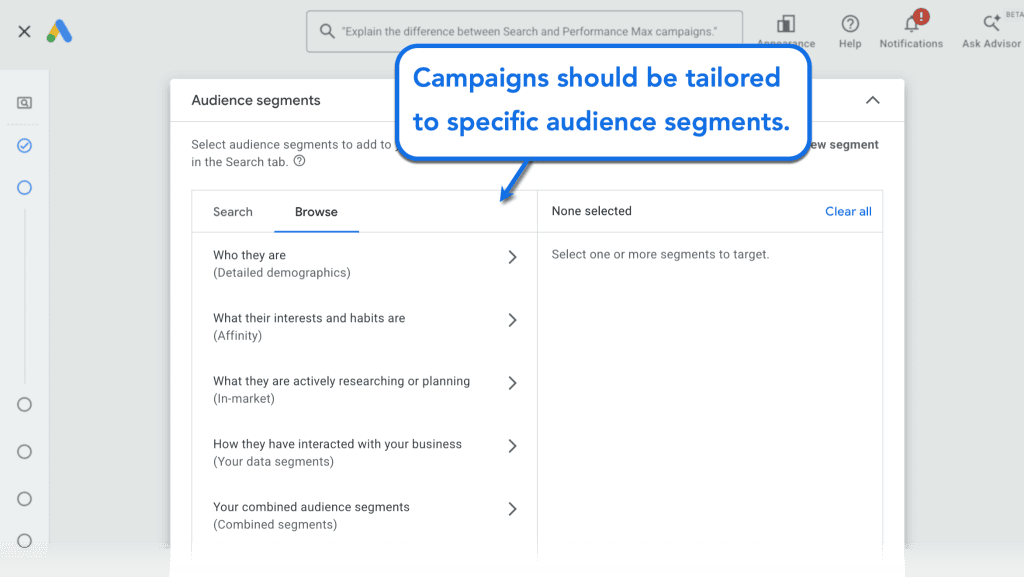
Below are a handful of copy creation tips to remember when advertising to two different audiences:
- Write for different levels of urgency: Individual-side copy should reflect the actual level of urgency and uncertainty involved, whereas employer-side copy should lead with better and more reliable outcomes.
- Use intent-specific CTAs: Individuals may respond better to “Get a Free Case Review” while employers may be more interested in “Request a Sponsorship Review.”
- Run A/B tests: Launch multiple variations of your ads, then compare the results to achieve the best possible version faster.
Filtering Out the Wrong Clicks
Use negative keywords to protect your budget from clicks that are unlikely to match the firm’s services or client criteria.
Some examples are:
- Travel-related terms: Searches done by people planning a trip, not immigrating long-term or hiring a lawyer (e.g., “tourist visa requirements,” “vacation visa application,” and “visa waiver program travel”).
- Government job searches: Job hunters looking for open USCIS positions, not legal help (e.g., “USCIS careers,” “immigration officer jobs,” and “USCIS hiring”).
- Free form searches: People only searching for free form or document templates, not representation (e.g., “free I-130 form download,” “free green card application PDF,” and “free immigration forms”).
Exploring Different Ad Platforms
Google Ads isn’t the only paid advertising option for immigration law firms.
Here’s a rundown of your options:
- Local Services Ads (LSAs): Similar to Google Ads, Local Services Ads are great for reaching individual prospects (while using a Pay-Per-Lead model rather than PPC).
- Paid legal directory listings: Consider paid placement options on platforms like Avvo and Justia to maximize visibility to local prospects searching for an immigration attorney.
- LinkedIn: While technically also a social networking platform, LinkedIn is primarily built for business users, including HR directors and in-house counsel making decisions regarding sponsorships.
Tracking What Actually Converts
The good news is, advertising platforms are equipped with integrated analytics and reporting tools.
Connect your ad platform to your legal intake or CRM software to track consultations, retained matters, and where every lead originated from. Use this information to improve your advertising strategy over time.
Aside from the steps above, here are additional tips to remember once your campaign goes live:
- Follow advertising, privacy, and client confidentiality rules.
- Import offline client data where appropriate.
- Never promise guaranteed outcomes.
- Don’t reference specific cases or personal details in retargeting copy.
Using Video Marketing to Educate and Build Trust
Video can be especially effective for building familiarity and trust alongside written content. And if you’re worried about video production, remember that a single recording can be cut up into multiple clips and reused across multiple platforms (e.g., TikTok, Instagram Reels, and YouTube Shorts).
Starting with Basic Explainers
Explainers are the easiest and most common type of legal-related video content on the web.
This is where you verbally explain immigration-related concepts, like visas, filing processes, eligibility, and document requirements. It’s basically educational content for people who prefer watching and listening over reading.
Explainers are perfect for short-form videos on platforms like Instagram Reels and TikTok.
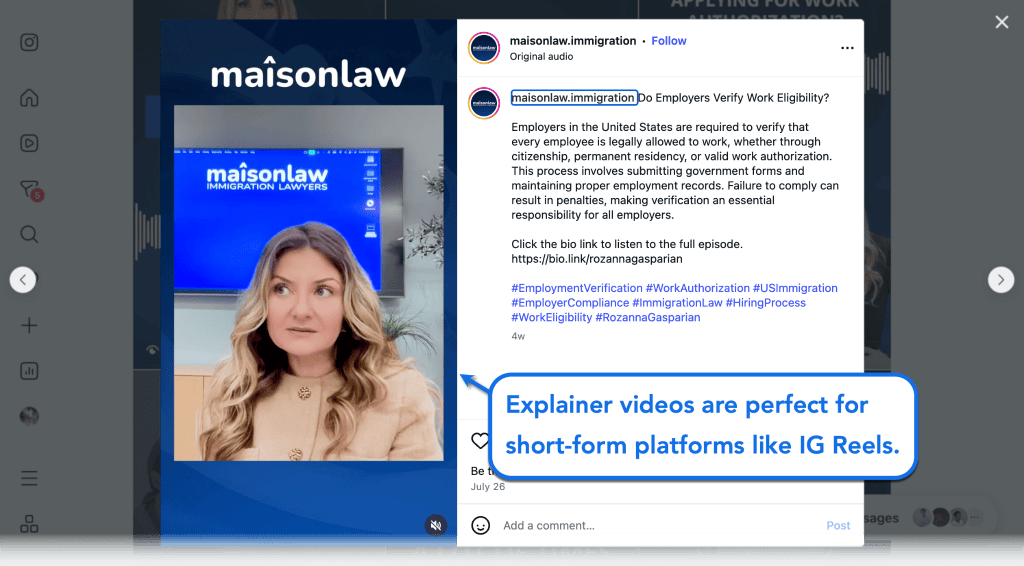
Just don’t overthink these and think of them as FAQ pages in video form. Pull questions your intake team hears most and answer them straight on camera (in five minutes or less).
Talking About Policy Changes
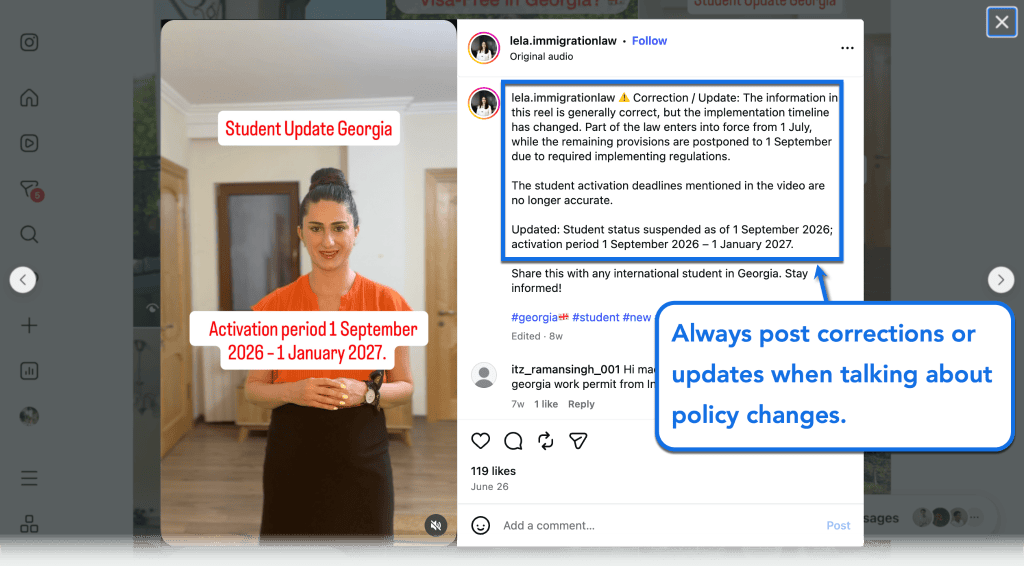
Immigration policy doesn’t sit still, and talking about these changes signals proactive dedication and authority in immigration law.
A quick two-minute video discussing the changes and who gets affected will go a long way.
Although accuracy is still your top priority, publishing timely, accurate commentary can increase the chance of engagement and sharing. Just be sure to promptly include corrections when they matter.
Letting Prospects See Who They’ll Work With
Record a short video introduction for each attorney, covering their expertise, background, and experience.
People want to know who they’ll be teaming up with, and a video introduction accomplishes this for them without having to physically walk into your office. Maximize value by briefly describing the consultation itself, like what to bring, how long it takes, and what happens next.
Just don’t hesitate to let your attorneys be creative and inject their personality into their introduction video.

Here are a few tips when creating attorney introduction videos:
- Let attorneys speak using their real language (English or not) rather than using a voiceover.
- Reuse introduction videos on your attorney bio pages.
- Speak directly to the client by addressing their problems and using direct language.
- Include a CTA encouraging clients to follow, share, leave a comment, or check out your website.
Creating Long-Form Videos
Prospects with higher intent to work with law firms need more than just short clips with broad overviews.
Employers, for example, may be conducting extensive research on sponsorship compliance. To them, a single, in-depth video that covers everything they need to know is significantly better than watching several short clips from multiple sources.
Webinars are a popular format for discussing technical topics in detail. While they’re harder and more expensive to create than short-form videos, webinars can be repurposed in multiple ways:
- Upload a recording of your webinar on YouTube or your own website.
- Clip webinar highlights and upload them on LinkedIn and short-form video platforms like Instagram and TikTok.
- Interact with your audience by asking direct questions, including polls, and actively reading chat messages.
Whatever you do, avoid giving out case-specific details and include a disclaimer that your video content doesn’t constitute legal advice. When hosting webinars, remind viewers that participating or interaction doesn’t create an attorney-client relationship.
DIY Immigration Marketing vs Hiring an Agency
Plenty of firms start out handling marketing themselves.
On the plus side, DIY marketing gives the firm greater, direct control and ownership over your website and digital marketing strategies. But at some point, the workload outgrows the time and effort a small team can spare.
An agency brings tested systems, execution, tracking, experienced staff, and specialized marketing resources to the table.
This means faster setup, fewer mistakes, and more reliable results. Not to mention your internal team will be free to focus on casework instead of campaign management.
The only challenge is looking for the right team.
Build an Immigration Law Marketing Framework That Pays Off
The success of immigration marketing isn’t tied to traffic alone.
It relies on a deep understanding of two different audiences, maximizing visibility, earning trust early, and catching urgency cases fast.
These don’t happen overnight, but you can get there faster with the right team.
That’s what we do here at LaGrande Marketing.
Schedule a free consultation with our team today, and let’s build an immigration law firm marketing blueprint that brings in cases.
Related Post
-

Bankruptcy Lawyer Marketing: SEO, Ads & Local Search
Most legal matters don’t carry the kind of stigma bankruptcy does, and that changes how people search for help. Someone in debt might sit on… -
Employment Lawyer Marketing & SEO: Get More Qualified Leads
Some workplace disputes require clear and immediate legal guidance. These involve clients frantically searching online with tight deadlines and high stress. Acquiring these cases takes… -
The Ultimate Guide to Medical Malpractice Lawyer Marketing
Securing high-value medical malpractice cases requires a digital marketing strategy around early trust-building and precise audience targeting. Unlike standard personal injury claims, prospective medical malpractice…