Marketing Automation Tools for Law Firms

In the legal industry, modern digital marketing is no longer just about the occasional newsletter or “posting whenever you get the time.”
If you want a consistent pipeline of qualified leads, a dependable client experience, and a steady flow of income, you need to invest in systems.
More specifically, marketing automation systems.
With the right approach, this can help you:
- Capture and qualify more potential clients faster
- Nurture prospects without overwhelming your team
- Maintain high brand visibility despite going against bigger competitors
- Minimize human error in document management and anywhere in the client lifecycle
That’s just scratching the surface.
On the contrary, marketing automation mistakes will only lead to an expensive tech stack that gets no results.
That’s why choosing the right tools is always the first step in implementing marketing automation.
Which Marketing Processes to Automate in Law Firms
Before we get to the good stuff, here’s a rundown of the marketing aspects and related processes you can automate:
- Page building and content creation: Automation tools can help you design your law firm website’s visuals and layout to compete with modern standards. And with the help of AI, you can also automate the most tedious aspects of law firm content creation, be it for SEO, blogging, social media, or email marketing.
- Forms and intake: Modern form builders and case management tools let you build automation workflows. This can be used to speed up processes like routing, confirmation emails, and conflict checks while minimizing errors.
- Customer/Client Relationship Management (CRM): As a business that thrives through client relationships, CRM solutions ensure your clients receive the quality service they deserve. Automation comes in to help track where leads come from, initiate lead nurturing funnels, organize contact information, and streamline client communications.
- Case management: Case management automation unlocks status-based triggers for case milestone updates as well as a variety of automated tasks that enhance the client experience. Some examples are welcome emails, document checklists, and client portal invitations.
- Client communications: Automated communications ensure no client is left out to dry whenever they have queries and requests. It also pertains to automated marketing workflows that are usually executed through email drip campaigns and direct channels (i.e., phone calls).
- Document management: While not strictly focused on marketing, document management has a significant impact on the client experience and your lead generation performance. The more friction you remove from the document management side, the easier (and faster) leads convert into paying clients.
- Analytics and reporting: You can’t improve or scale your marketing operations without tracking your analytics. With automation and AI, it’s easy to turn multi-page, data-rich reports into actionable insights.
Top Marketing Automation Tools for Law Firms
Now that you know what marketing automation means for law firms, it’s time to explore the legal marketing automation software space.
Remember, there’s no single “perfect” tool that fits the needs of every firm. But a successful marketing automation ecosystem always relies on a core legal platform augmented by a stack of specialized marketing software with automation features.
1. Clio Grow
Best for: Firms already on (or looking to migrate to) the Clio ecosystem
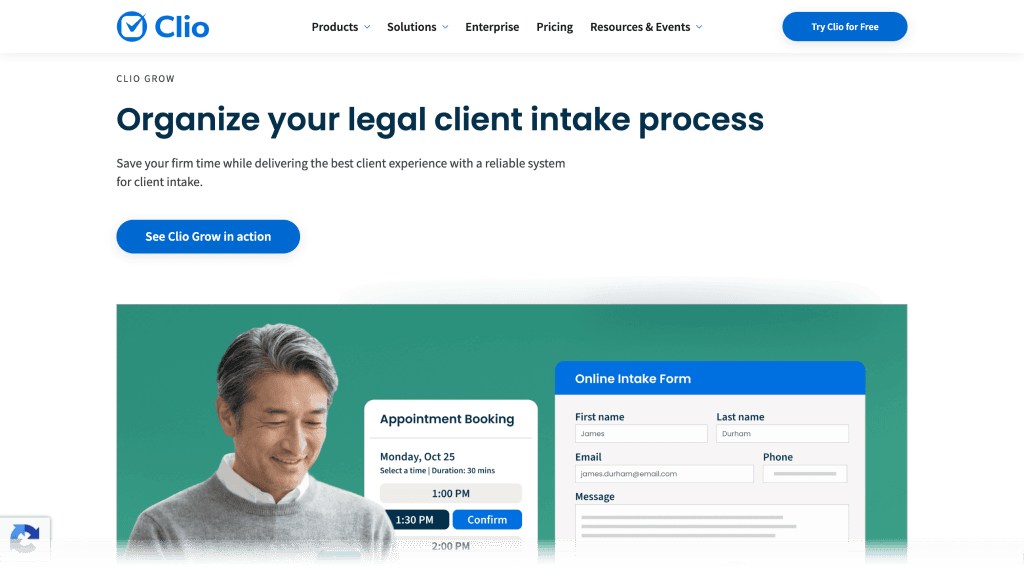
Clio Grow is a legal-specific CRM platform that automates tedious client intake tasks, like data collection, document drafting, and e-signature processing. It’s specifically designed to integrate with Clio Manage, which is a popular legal practice management software, to streamline handoffs from lead to active matter.
Key strengths:
- Developed specifically for law firm intake and CRM
- Easily customizable intake forms and automated follow-up sequences
- E-signatures, appointment scheduling, and real-time pipeline tracking
2. Lawmatics
Best for: Firms looking to create custom automated workflows with ease
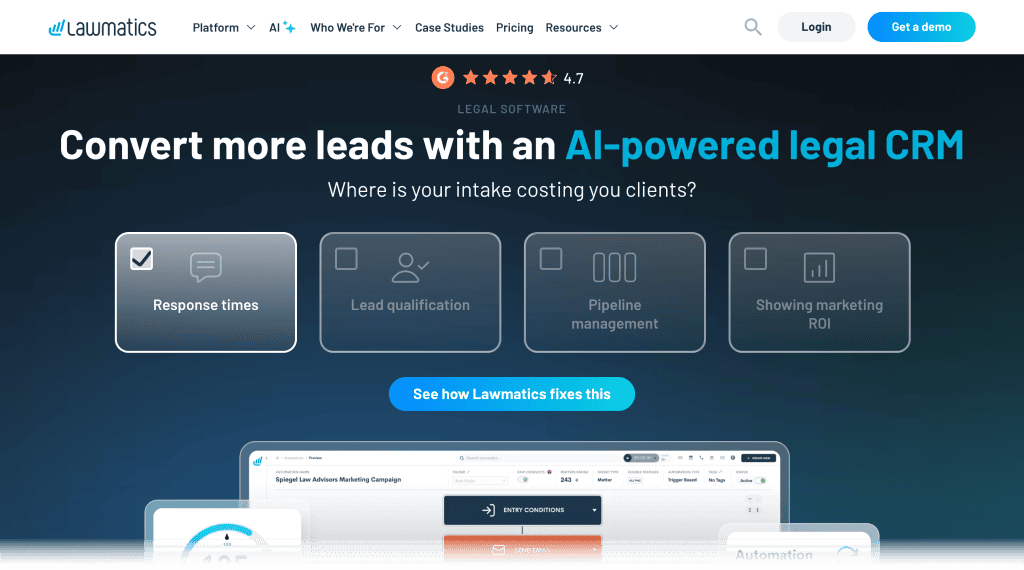
Lawmatics is an AI-powered legal CRM that provides law firms with deep control over their marketing automation. It simplifies the creation of custom automation workflows with its visual, drag-and-drop builder without skimping on advanced tools like multi-step campaigns and branching logic.
Key strengths:
- Drag-and-drop visual automation builder for emails, tasks, status changes, and SMS
- Build intake forms, client portals, and email drip campaigns without touching code
- Built-in reporting and revenue attribution for multi-channel law firm marketing
3. Law Ruler
Best for: High-volume firms looking to streamline their lead management and call tracking
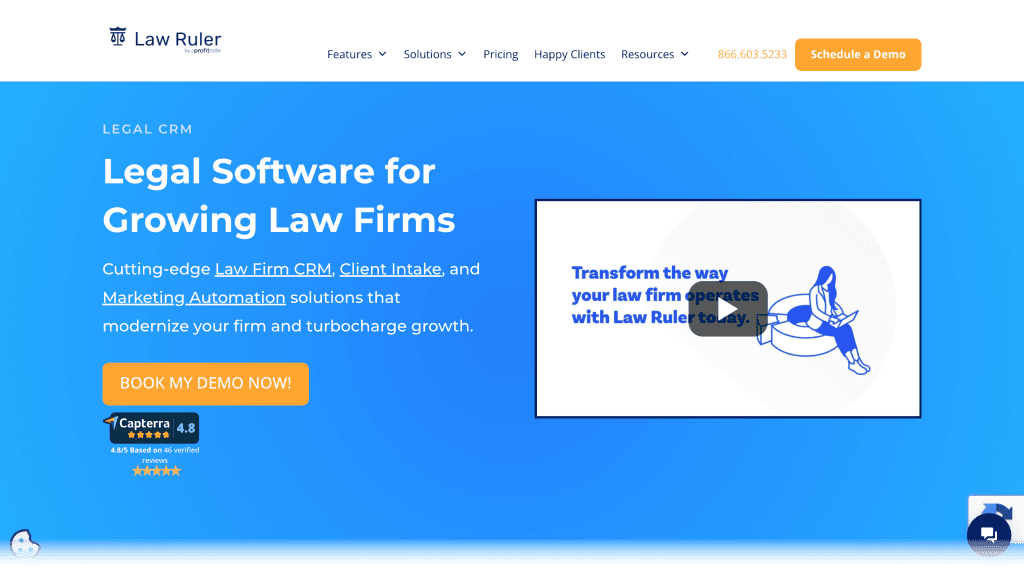
Law Ruler is another well-known legal CRM and client intake platform with strong marketing automation features. It’s a great fit for law firms that urgently need tight control over fast-growing lead generation pipelines, incorporating lead source tracking and high-touch follow-up features.
Key strengths:
- Easy-to-use call and text tracking for visibility over phone leads
- Automated follow-up workflows via pre-recorded voicemail and email
- Growing library of integrations with practice management tools
4. Lead Docket
Best for: Law firms going all-in on legal intake visibility and automation
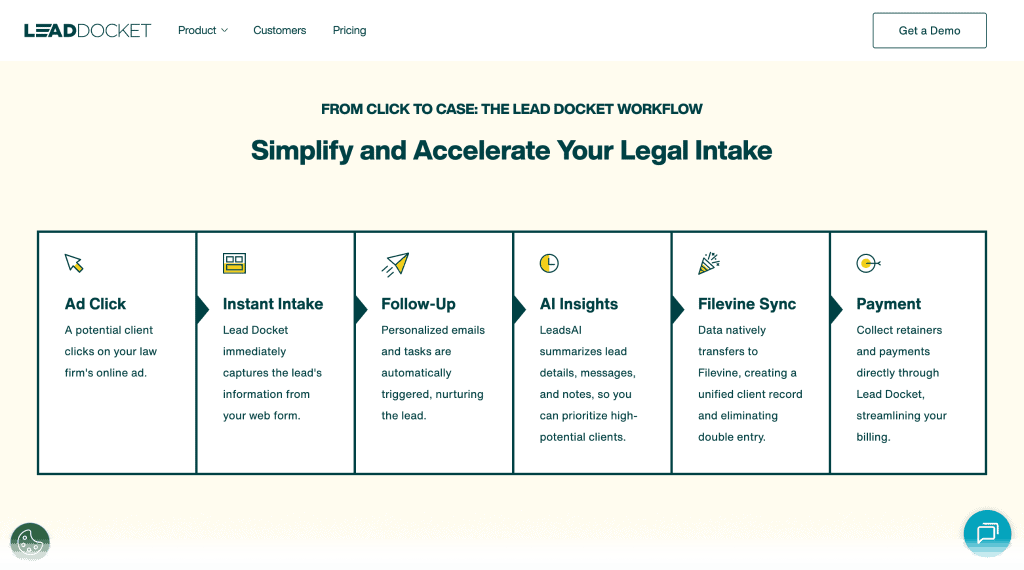
Lead Docket is a specialized legal intake solution with all the tools you need to generate ad clicks and turn them into paying clients. The platform ensures absolute intake clarity and accountability, letting you know who followed up, how fast, and what results were achieved.
Key strengths:
- Clear dashboards and lead reporting from initial contact to signed client
- Logic-based workflows for automated routing and scoring
- Supports integrations with popular legal practice management platforms
5. HubSpot
Best for: Firms looking for a battle-tested, all-purpose CRM and marketing platform
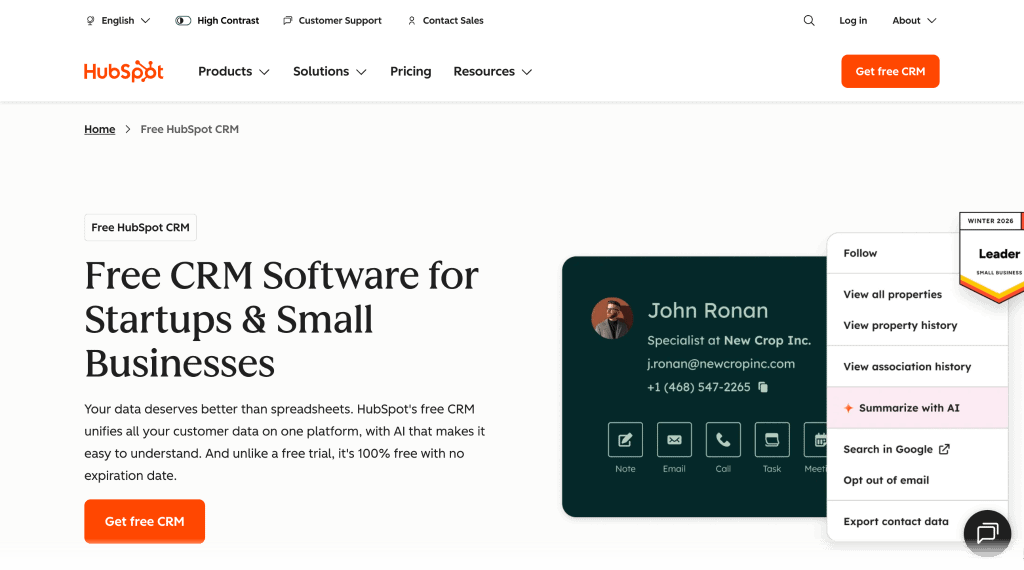
HubSpot is one of the most trusted names in the CRM and marketing management spheres. It’s a highly flexible and scalable platform, designed to work with a set of products or “Hubs” for sales, customer service, content marketing, data management, and more.
Key strengths:
- Expandable ecosystem that allows you to scale your legal growth software stack with components that gel together seamlessly
- In-depth analytics and marketing attribution across channels
- Programmable automation for just about any business process within your firm
6. ActiveCampaign
Best for: Firms focusing on growing client relationships through advanced AI-first marketing and autonomous customer experience optimization
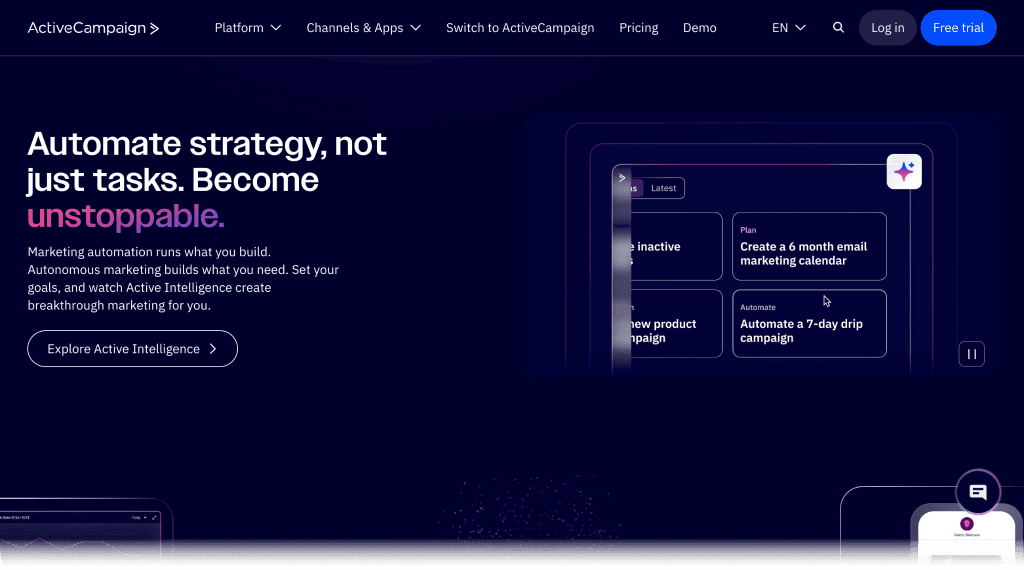
ActiveCampaign has fully evolved from an email marketing automation product to a more robust, AI-first autonomous marketing and CRM platform. It features a drag-and-drop workflow builder for automating some of the most important marketing channels for law firms, including email, SMS, and instant messaging.
Key strengths:
- Massive library of third-party integrations to connect tools and services in your existing stack
- User-friendly visual automation workflow builder
- Advanced AI for prompt-based automation creation
7. Keap
Best for: Small to mid-sized firms that need a centralized marketing and sales automation solution
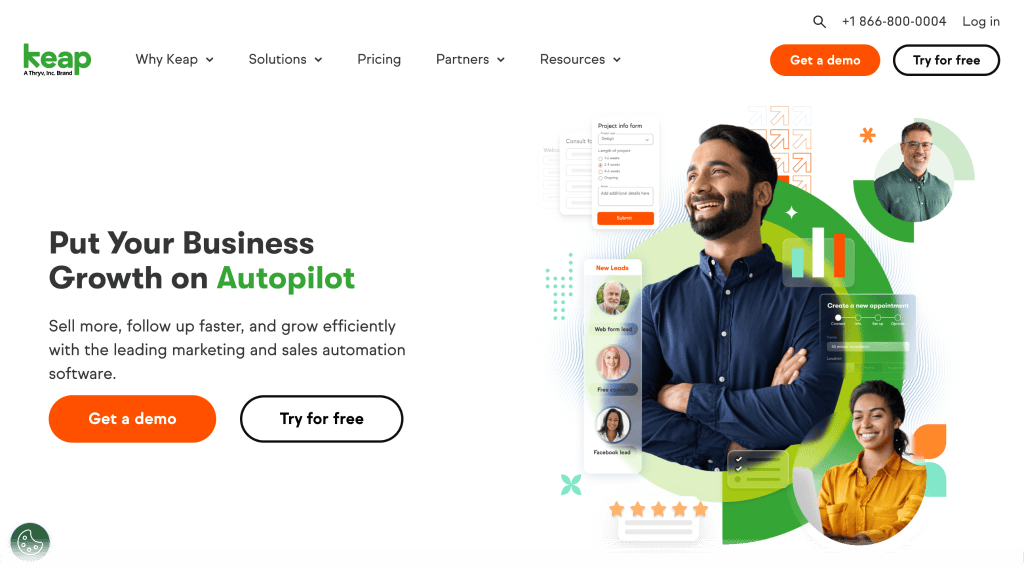
Keap is a domain-agnostic marketing, sales, and CRM platform designed for startups and small businesses looking to connect with their ideal audience on a more personal level. It provides a single, central system for lead management, email marketing, and sales that’s powered by straightforward and dependable automation tools.
Key strengths:
- Large library of third-party integrations, from payment processing services to accounting tools
- Built-in landing page builder for automated data sync
- Visual campaign builder for mapping client journeys
8. CallRail
Best for: Firms requiring a solid call tracking and marketing analytics platform
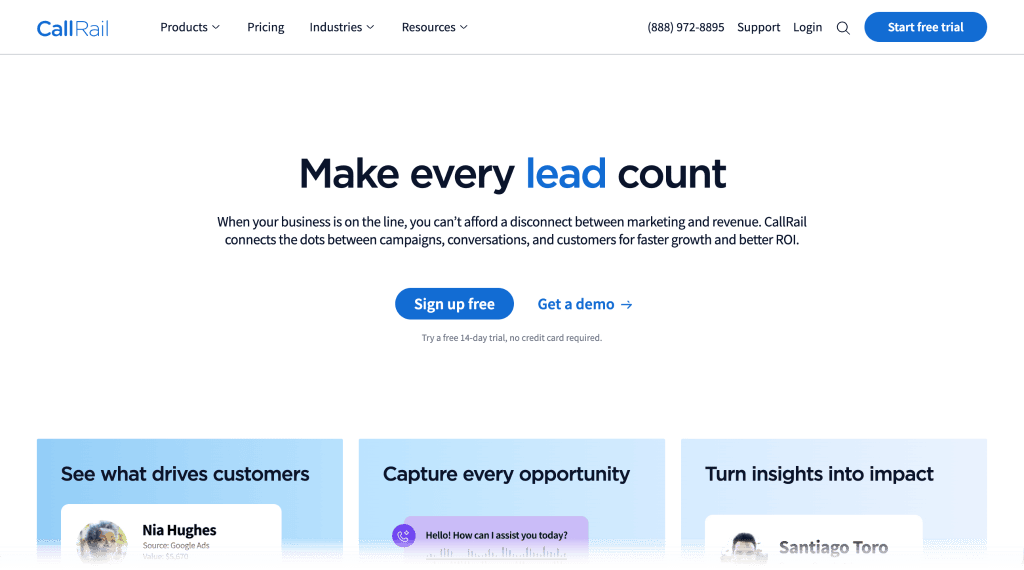
CallRail is a leading call tracking and lead engagement software that makes sure no lead ever slips through the cracks. This is a must-have for firms that deal with a high volume of calls, but are not seeing proportionate growth in conversions.
Key strengths:
- Dynamic call tracking that automatically transcribes and analyzes conversations
- In-depth attribution reports revealing top-performing channels in terms of calls and form fills
- Call quality management tools, including call recording and keyword spotting
9. Calendly
Best for: Attorneys still looking for a reliable appointment scheduling tool
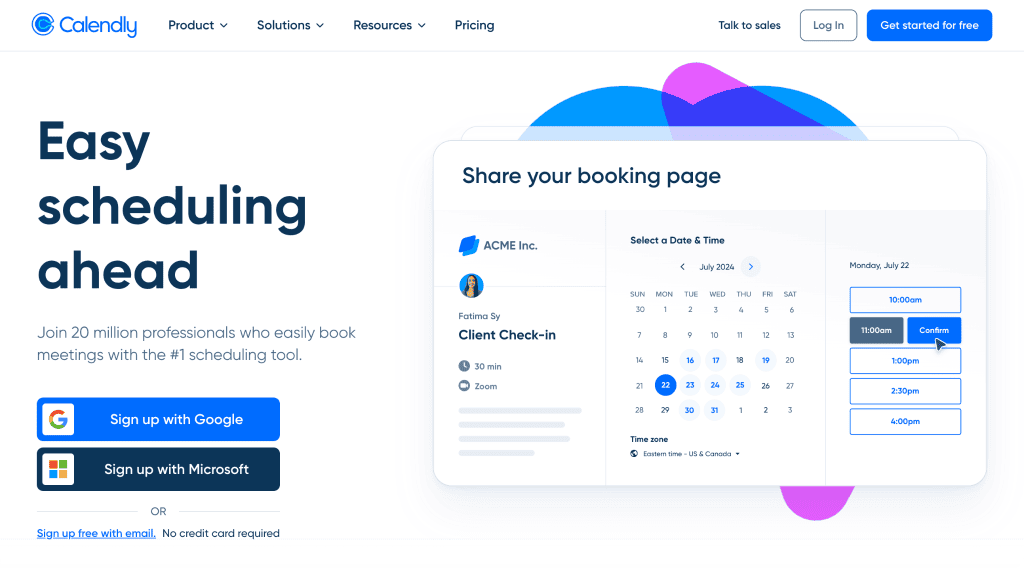
Calendly is a trusted scheduling solution not just in the legal space, but across several industries. It automates the entire booking pipeline and reduces back-and-forth scheduling, fast-tracking consultations, and kickstarting the client journey.
Key strengths:
- Integration with widely-used conferencing tools, like Zoom, Microsoft Teams, and Google Meet
- Centralize your calendars by connecting Google Calendars and Outlook
- Support for different event formats, including round robin, collective, and 1:1
10. DocuSign
Best for: Streamlining signatures and engagement agreements
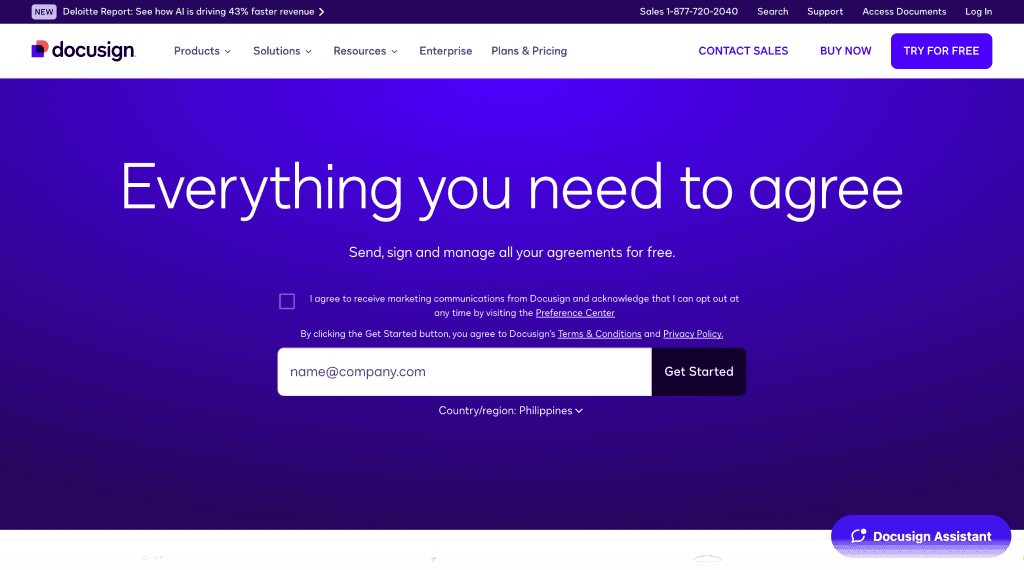
DocuSign removes a crucial bottleneck between “I want to hire you” and “I’m now your client.” It’s an e-signature and AI-powered agreement management tool while consolidating your document management.
Key strengths:
- Legally-compliant e-signatures with auditable trails
- Ready-to-use templates for standard agreements and forms
- Automation tools for reminders, routing, and contract lifecycle tasks
Common Mistakes Law Firms Make with Marketing Automation
Ready to fire up your first automation?
Remember, automation is not a magic bullet that guarantees positive results.
Go through the list of marketing automation mistakes below to make sure your law firm does it right:
- Paying for tools before clarifying goals. Not everything in the legal practice can be automated, and not all automations generate positive returns. Work your way backward, starting from your desired business outcomes down to the individual processes that should be automated.
- Over-automating relationships. Lawyer-client relationships are not meant to be automated. While you can automate certain tasks like data entry, initial responses, and transcription, never use automation as an excuse to deprive clients of authentic and emphatic human support.
- One-size-fits-all communication. If you must use automation for some interactions, don’t rely on a single set of responses for everyone. Use contact segmentation (e.g., case type and lead source) and client journey stages (e.g., consultation booked, retained, lead, and past client) to personalize automated communications based on the audience’s needs.
- Set-and-forget approach. Legal rules, campaign performance, and client expectations all change over time. Conduct regular workflow reviews, from drip campaigns to internal processes, to make sure they’re working as planned.
Compliance, Ethics, and Data Security
Finally, when building marketing automation workflows, you need to keep ethical guidelines top of mind.
Remember, automation can amplify both good and bad communications. Be sure to review the considerations below before using automation:
- American Bar Association (ABA) advertising rules: To protect client interests, the ABA requires all law firm marketing and advertising materials to follow strict guidelines, like using unjustified expectations (i.e., “guaranteed win”) and publishing misleading comparisons against other firms.
- Consent and privacy: Respect your audience’s right to privacy by making sure consent is properly requested before adding them to your contact list.
- Data security: Don’t be clumsy with your clients’ data and only use tools with enterprise-grade security features, including access control, encryption, and strong password hygiene within your team.
- Content sensitivity: When using automation for content generation (i.e., AI-generated content), practice vigilance by putting a human reviewer in the loop to catch hallucinations, potentially offensive language, or anything that can be misconstrued as legal advice.
Final Words
Marketing automation is about removing friction from workflows.
Your goal is to eliminate bottlenecks, enhance efficiency, and scale your firm’s operations without relying on a bloated workforce.
It’s never about turning your marketing operations into a cold, robotic machine that treats clients like rows on a spreadsheet.
Always pair smart automation with human empathy, judgment, and creativity.
Of course, make sure you have the right tools for the job.
Start with the list of marketing automation tools above. Compare each option against your firm’s marketing objectives and don’t hesitate to use free trial versions or demos to verify a good fit.
If you need help choosing the right tools and implementing winning automation workflows, we’re more than happy to help. Talk to our team here, and let’s build a marketing automation system tailored to your firm.
Related Post
-

9 Best Legal Directories for Lawyers and Law Firms
Not all online business directories are the same. If you want to increase your law firm’s online visibility and attract qualified prospects, you need to… -
How Law Firms Scale with The Right Tech Stack
Plenty of law firms don’t consider the big picture when it comes to digital transformation. The typical approach is to adopt one solution at a… -
How to Use Live Chat for Attorneys: The Ultimate Lead Conversion Guide
Modern legal consumers operate on a timeline of instant gratification. If an injured slip-and-fall victim or a stressed parent seeking a divorce lands on your…