AI Legal Tools for Tech-Driven Law Firms (2026)

Artificial Intelligence (AI) has transcended the “marketing buzzword” label.
That rings true even in the legal industry.
Today, lawyers across practice areas have adopted AI-powered automation to elevate firm-wide productivity and efficiency. And while being a late adopter doesn’t necessarily sentence your firm to a slow death, it definitely means you’re missing out on some game-changing benefits.
Read on if you’re looking to empower your legal practice with AI but don’t know where to start.
Benefits of AI for Modern Law Firms
Here are the top reasons why law firms should pay attention to AI:
- Improve productivity and efficiency. Automate time-consuming and repetitive manual tasks (e.g., document drafting, data entry, and contract review) while eliminating human error.
- Focus on billable work. AI can take care of non-billable work, including administrative and procedural duties, so your team can focus on tasks that actually drive revenue.
- Speed up the case-building process. Modern AI tools, particularly those specifically designed for legal workflows, are capable of one-click, instant summarization and contextual data analysis.
- Design personalized experiences for client intake. With AI, it’s much easier to develop custom client intake experiences, which are crucial for maximizing engagement and building trust.
- Enhance risk management and compliance matters. Use AI to effortlessly detect inconsistencies, regulation changes, and other compliance issues before they cause issues.
- Identify cost reduction opportunities. Leverage data to quickly reveal cost-efficiency gaps and other opportunities to lower your firm’s overhead.
Top 13 Legal AI Tools for Attorneys
Whether you like it or not, not all AI legal tools are made equal.
In fact, it’s easy to find rule-based automation tools posing as “AI-powered.”
The good news is, you don’t need to start your research from scratch.
Here are the top 13 legal AI tools that are proven to get positive results for law firms:
1. ChatGPT
ChatGPT is one of the best AI tools for law firms in terms of versatility.
While not purpose-built for law firms, ChatGPT is capable of automating a range of tasks in legal workflows. This includes lead scoring, local legal research, document creation, and more.
It’s recommended for law firms to use a paid ChatGPT Business plan for expanded limits and higher levels of security, compliance, and privacy. Getting a subscription also enables you to customize the AI’s generative features, aligning it with your firm’s guidelines and brand identity.
2. Lexis+ AI
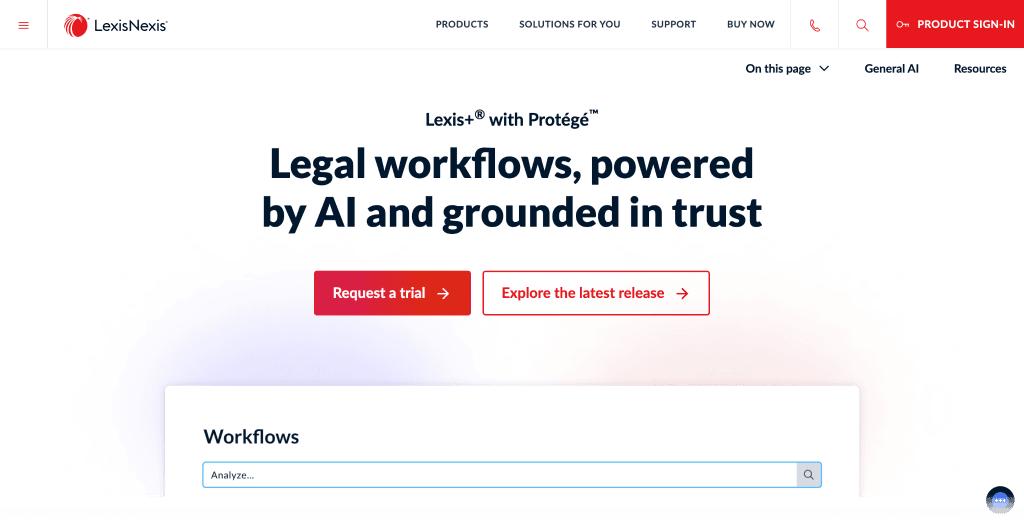
Lexis+ taps into LexisNexis’s massive legal research database to fuel its generative AI engine and tools.
Similar to ChatGPT, you can get the Lexis+ AI assistant to perform a variety of tasks through specific queries or prompts. What makes it different is its lineup of AI-powered workflows and legal-specific tools.
You can use Lexis+ AI to generate deposition questions, draft legal documents, validate legal references or citations, summarize documents, and more.
3. CoCounsel
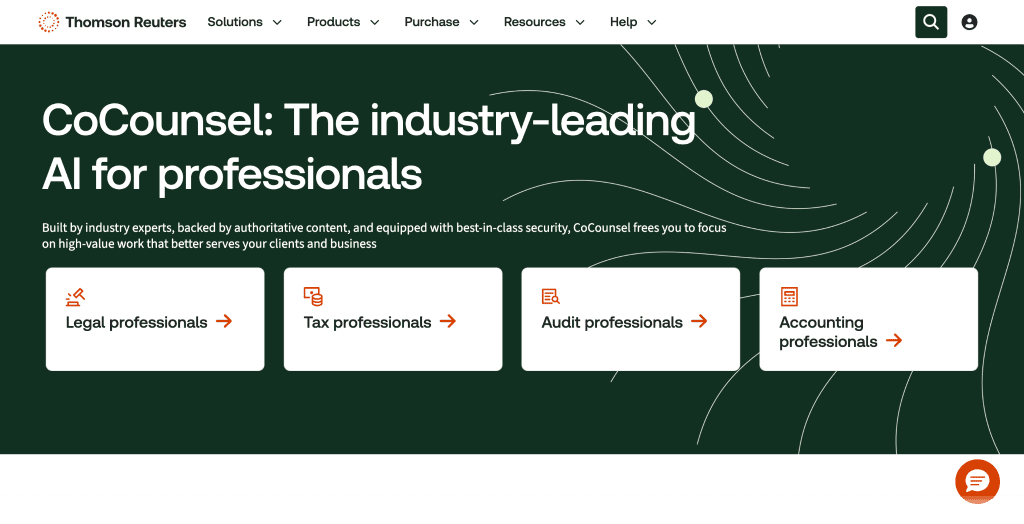
CoCounsel by Thomson Reuters is a reputable and widely used AI legal assistant, known for its reliability in handling a range of legal research tasks. It can quickly outline case facts, generate discovery responses, review in-depth documents, and draft communications with human-like, professional-grade accuracy.
Tech-forward law firms will also benefit from CoCounsel’s emphasis on workspace integration.
Unlike a lot of legal AI tools designed as standalone platforms, CoCounsel is designed to seamlessly integrate with third-party Document Management Systems (DMS), knowledge search tools, and Microsoft 365.
4. Smith.ai
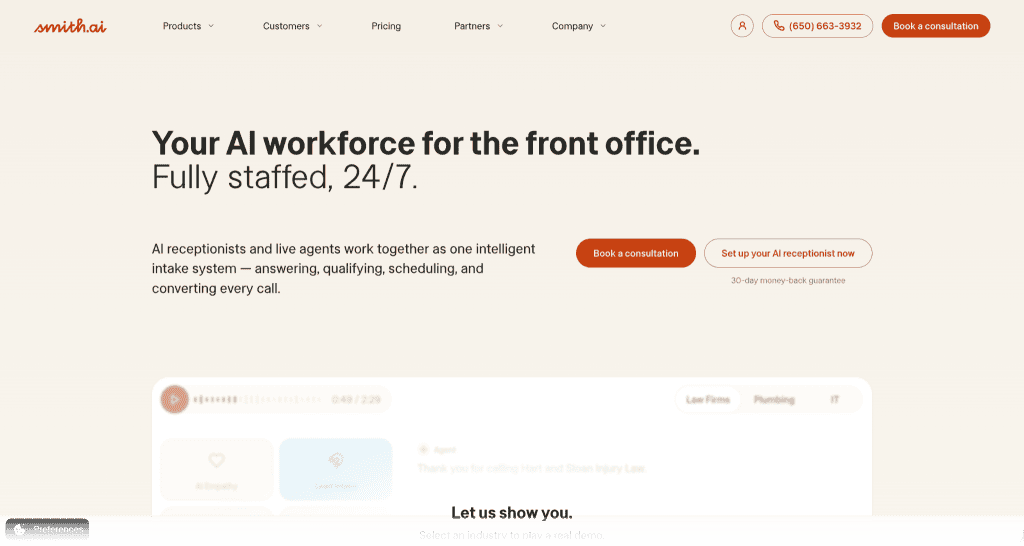
Smith.ai explores a very specific use case of AI that most legal tools overlook. By combining Natural Language Processing (NLP), advanced speech recognition, and the generative capabilities of GPT-4, it equips law firms with an AI receptionist that can handle client interactions 24/7.
Other than responding to queries, Smith.ai also automates intake, data lookups, call routing, and other workflows while keeping live agents in the loop. This helps law firms make a solid impression during first-touch interactions, ensuring no prospective client slips through the cracks.
5. Everlaw
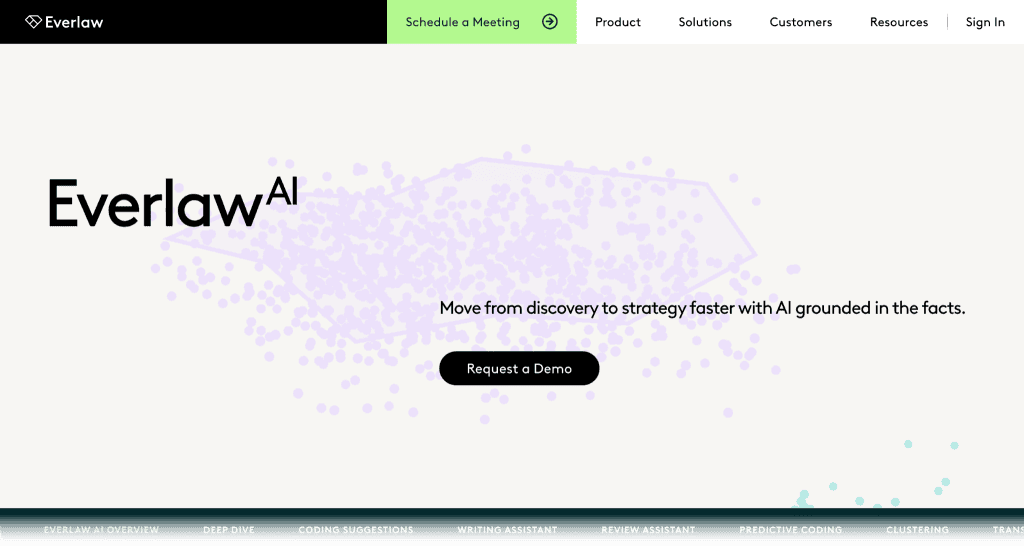
Everlaw is an AI software that specializes in collaborative eDiscovery, case building, and analytics. It features a suite of easy-to-use data visualization tools, helping legal teams quickly analyze evidence and underscore important connections.
In addition, Everlaw also offers advanced security and efficiency tools; a huge advantage for firms that handle regulatory investigations as well as major litigation. The platform also augments real-time collaboration, greatly reducing friction and optimizing client communications during discovery.
6. Harvey

Harvey is a flexible AI software built for mid-size to enterprise-level legal teams. It’s primarily designed to accelerate legal research, compliance tracking, and document management workflows.
You can use Harvey to analyze contracts, summarize documents, cross-check citations, generate drafts, and research complex legal questions across domains. The platform is also equipped with enterprise-grade security, ideal for law firms that take data privacy and client confidentiality seriously.
7. GenieAI
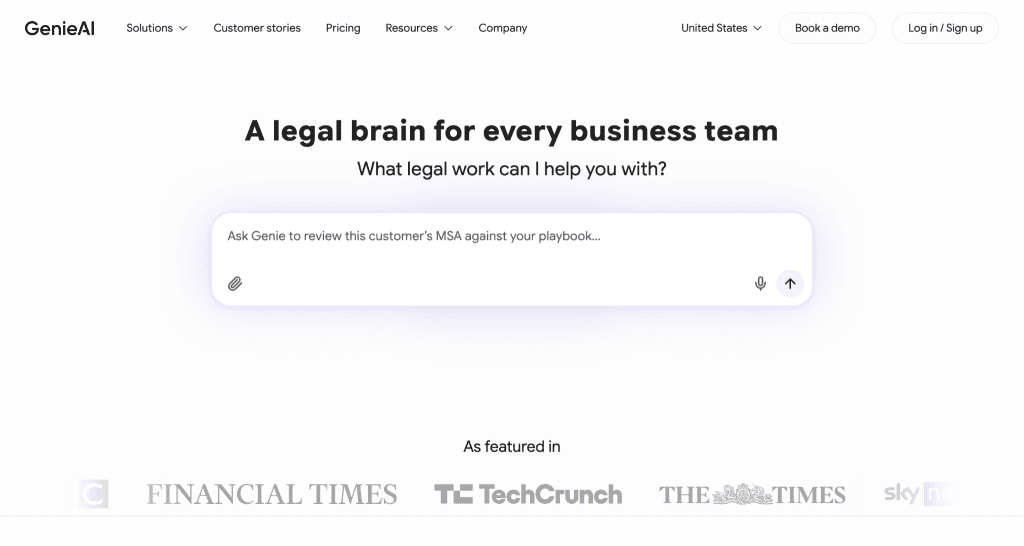
GenieAI is another specialist AI tool meant to simplify your legal team’s work around contracts. It automates tasks like template creation, contract reviews, drafting, and everything else within the contract lifecycle.
While GenieAI excels at automating non-billable contract work, it’s not a generalist tool like ChatGPT. It does, however, get better over time and can adapt to your firm’s unique clause library.
8. Legora

Legora is a collaborative AI tool for automating repetitive, non-billable work like contract review and advanced clause detection. Its key feature is the visual workflow builder, which allows firms to automate even complex legal tasks with moderate setup.
Law firms can also use Legora to design “Playbooks,” piecing together an initial position, fallbacks, and conditions for automating document reviews and edits. This can be directly integrated with Microsoft Word, enabling high-level automation at high efficiency.
9. PatentPal

PatentPal is a huge addition to any Intellectual Property (IP) lawyer’s toolkit.
It allows attorneys to breeze through the most tedious aspects of patent application drafting. And since PatentPal uses IP law training data, rest assured that it aligns with USPTO structural standards.
10. Kira (Litera)
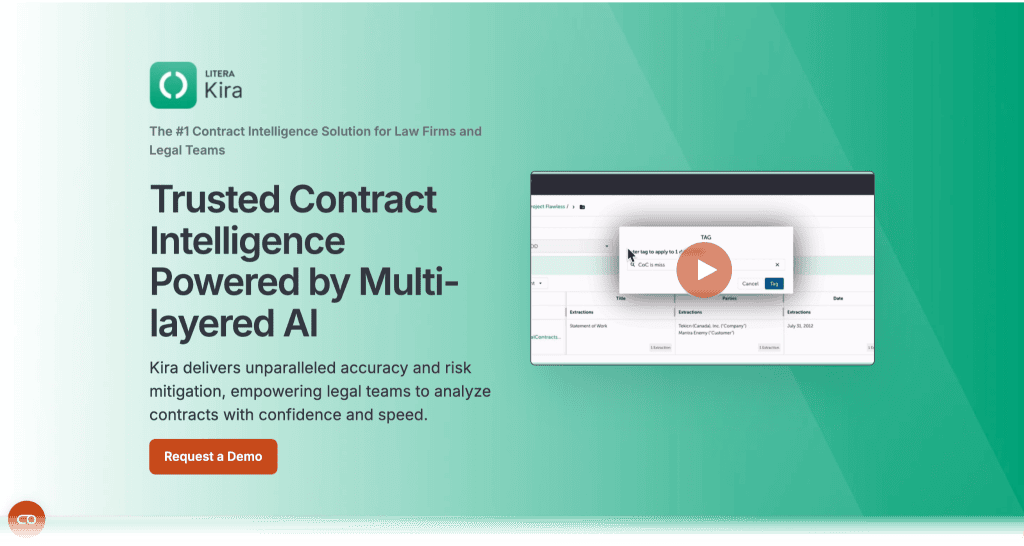
Kira is an AI-powered “contract intelligence” tool built for efficient document analysis and due diligence. It excels in clause extraction, empowering teams with the ability to analyze dozens (or hundreds) of contracts with surgical precision.
Corporate law firms, in particular, can take advantage of Kira to efficiently assess risk and compliance in M&A transactions. It can quickly reveal trends in large document libraries while making sure you don’t miss any critical details.
11. Blue J
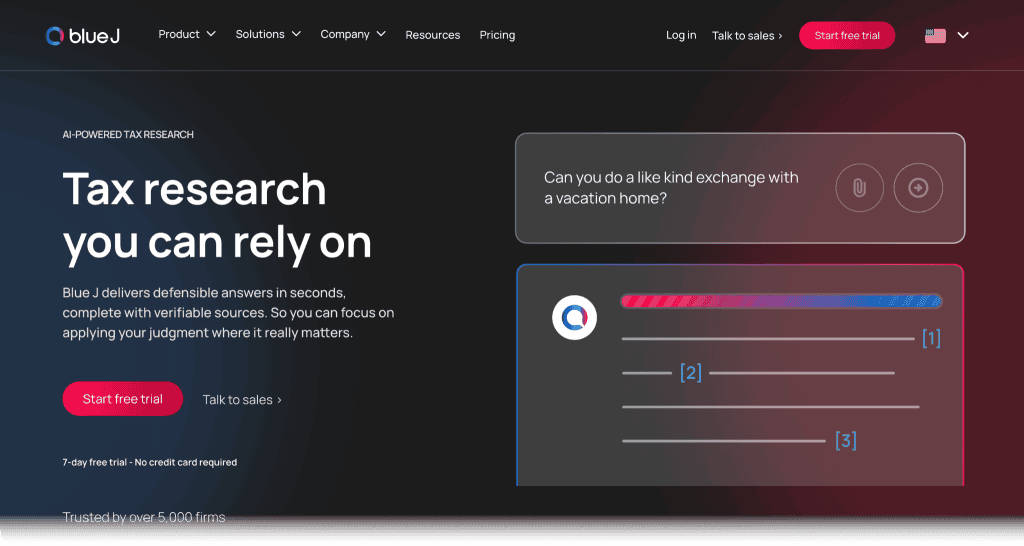
Blue J is a scalable AI-powered tax research platform for firms of any size. You can use it as a prediction engine to prepare for outcomes from complex legal issues related to employment and tax laws.
This unique feature helps legal teams prepare for different scenarios in court, strengthening their arguments by identifying similar cases and analyzing client files. And to help generate realistic and airtight predictions, Blue J utilizes a library of expert-curated content, including commentary from Tax Notes and the International Bureau of Fiscal Documentation (IBFD).
12. Laurel

Laurel is an AI tool designed to help lawyers streamline time tracking. It automatically captures billable time and groups entries according to client, matter, and custom project codes.
This essentially frees your team from the unnecessary pressure of keeping accurate timesheets, enabling them to focus on doing their best work. Of course, Laurel’s AI is hard-coded with data privacy and security in mind, backed by features like Single Sign-On, always-on encryption, and region-locked data storage.
13. Ivo

Lastly, Ivo is a comprehensive, legal contract intelligence solution that speeds up contract cycle times. It features an AI assistant for automating research, drafts, redlining, summarization, and revisions through prompt-based controls.
Ivo also maintains an AI-native contract library, intelligently connecting the dots between related contracts by identifying amendments, superseding agreements, and more. No need for manual tagging and sorting.
Things to Consider Before Investing in AI Tools
- Investigate reviews: Always check user reviews, not just to inspect the quality of an AI tool but also its real-world performance and use cases in your specific practice area.
- Always do hallucination checks: Whenever generative AI tools mention statistics or cite events, take a minute to verify the facts yourself to prevent a disaster.
- Assess your firm’s needs: Work backward by identifying what you want to accomplish first before researching AI legal tools.
- Prefer legal-specific tools: While generalist AI tools (i.e., ChatGPT) can be extremely useful for law firms, prioritize solutions that are tailored to lawyers, especially if you’re looking to solve a specific challenge.
- Inspect security policies: Never ignore the importance of cybersecurity and data privacy features when picking an AI tool, especially if you plan to integrate it with existing systems like your DMS or case management software.
- Utilize trials or demos: When researching a tool, don’t hesitate to take advantage of a free trial version or personalized demo to evaluate real-world performance.
Final Words
Just like with physical tools, any piece of software is just as effective as the hands wielding them.
Remember, the list above includes the most trusted and highest-rated AI tools in the legal space. But they don’t guarantee significant, profitable results if you’re ill-prepared to use them.
To make the most out of AI tools, build your legal software knowledge first using resources like:
- How to Use ChatGPT to Supercharge Your Legal Practice
- Top 12 CRM Software for Law Firms
- Top 15 Document Management Systems for Law Firms
Good luck!
Related Post
-

9 Best Legal Directories for Lawyers and Law Firms
Not all online business directories are the same. If you want to increase your law firm’s online visibility and attract qualified prospects, you need to… -
How Law Firms Scale with The Right Tech Stack
Plenty of law firms don’t consider the big picture when it comes to digital transformation. The typical approach is to adopt one solution at a… -
How to Use Live Chat for Attorneys: The Ultimate Lead Conversion Guide
Modern legal consumers operate on a timeline of instant gratification. If an injured slip-and-fall victim or a stressed parent seeking a divorce lands on your…