ChatGPT Visibility for Law Firms

Potential clients are now going beyond traditional search results to find legal help.
More and more are turning to AI tools like ChatGPT and Gemini, asking questions like “who’s the best personal injury attorney near me?”
This post is for lawyers who have little to no clue about how to tap into this shift.
We’ll break down how AI search works, why it matters, and how attorneys like you can gain the competitive edge.
Let’s get started.
Why AI Search Matters More Than Ever
AI tools like ChatGPT, Gemini, and Perplexity have not only changed how marketers approach specific areas like content development and email marketing. It also had a profound impact on consumer behavior.
Statistics show that 28% of prospects now use AI to research law firms. That’s a significant slice of potential revenue you’ll miss out on if you continue to ignore AI optimization.
Another study revealed that 2.1% of ChatGPT users are looking for specific information on products or services they need.
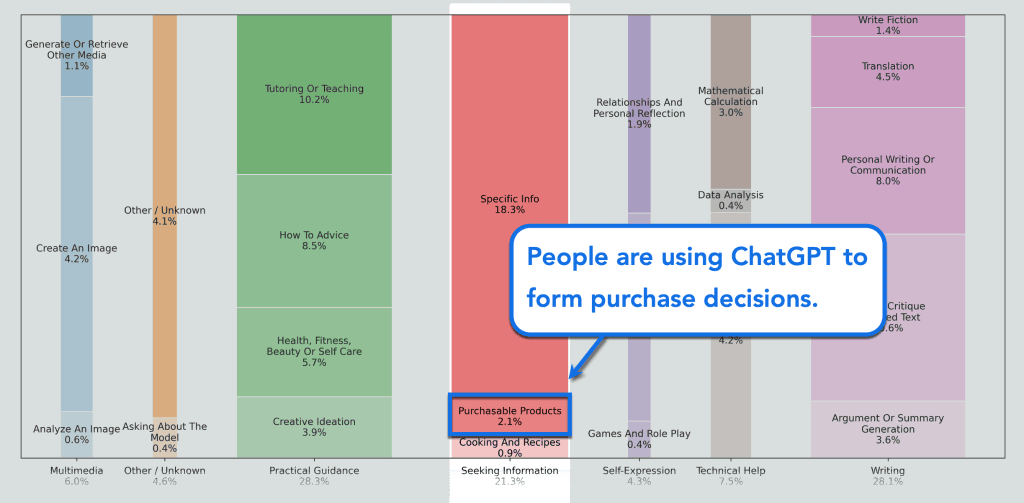
While it may not seem significant at a glance, remember that ChatGPT caters to around 67-77 million monthly active users in the United States.
Remember, clients aren’t just scrolling through multiple search pages and manually comparing law firms anymore. They now also hop into their preferred AI assistant, ask a direct question, and wait for direct recommendations.
Without AI optimization, you’re practically invisible to these leads.
What ChatGPT Visibility Really Means
While traditional SEO success is measured in rankings, AI SEO is evaluated through visibility and trust.
It’s not just about getting mentioned and being visible for a set of keywords or queries. It’s also about being presented as a trustworthy firm that people can trust.
You’re not only fighting for AI mentions. You’re also ensuring your firm gets mentioned in a positive light.
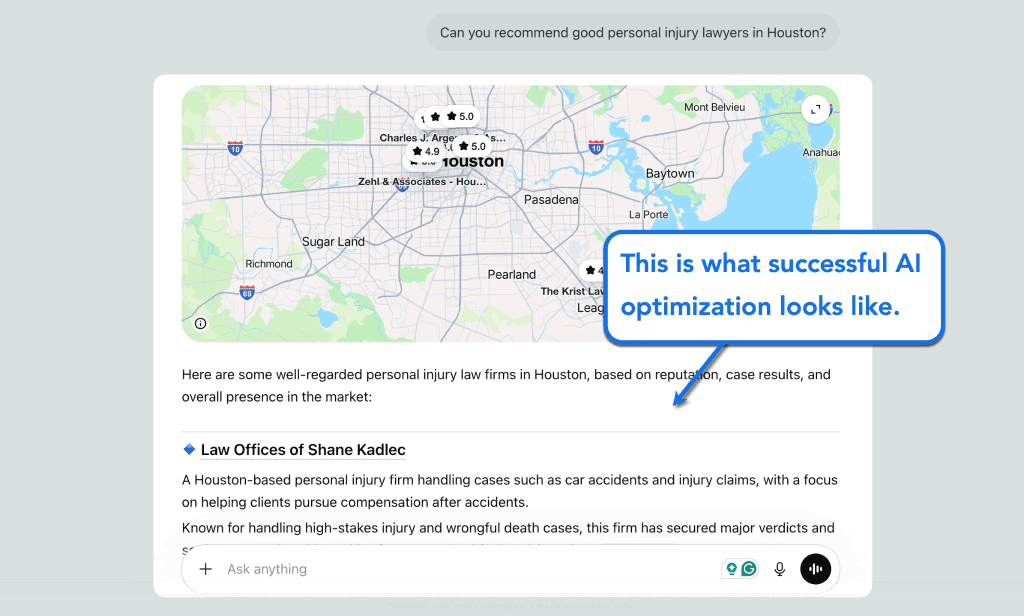
This is what ChatGPT optimization delivers: Positive visibility in deep, personal AI conversations that involve high-intent leads with urgent legal needs.
Core Elements of ChatGPT or AI Optimization for Attorneys
Remember, every law firm AI optimization campaign is unique.
You need to piece together your strategy based on the queries and AI data sources that align with your firm’s specific goals. However, there are a few must-have components that all law firms should include:
1. Entity Strength and Consistency
Your law firm and legal team must be accurately and consistently represented across AI-accessible information sources. This includes your Google Business Profile, Avvo, your chamber of commerce website, and other trusted legal directories.
The goal is to make sure AI engines associate your name with the correct terms, topics, or “entities,” while understanding the relationships between them. For example, you need ChatGPT to understand that your lead attorney’s name is associated with your firm’s name, and that your firm’s primary practice area is criminal defense.
Entity-based SEO involves building content clusters around your core topics and utilizing Schema markup to help AI engines learn the context and relationships surrounding your attorneys, practice areas, and other trademarks.
2. Authority Building
AI engines follow complex algorithms to determine the reputation, relevance, and authority of businesses when synthesizing responses.
To gain their favor, you need to go beyond high-quality link building. You need to optimize your attorney bios, generate positive reviews, and publish authority pieces (e.g., case studies, client success stories, and high-quality opinion pieces around important legal issues).
3. AI-Structured Content
Every piece of content must also be structured and optimized for conversational-style queries, which AI-based communications run on.
The thrust should be directly answering questions using natural language, rather than strictly following keyword-based, SEO-driven outlines. A useful tip is to use queries like “who’s a good criminal defense attorney in Houston” as anchors in your content, which must be immediately followed by a clear and concise answer.
User Intent in AI Conversations: Informational vs. Transactional
When building your visibility in ChatGPT or any other AI tool, it’s important to decide if you’re targeting users with informational or those with transactional intent.
- Informational: Queries done by users with purely research-related intentions (i.e., “what to do after a car accident?”).
- Transactional: Queries by users with urgent legal needs who are actively looking to hire an attorney.
While engaging users with informational intent may not directly result in more leads, it helps establish visibility, which is crucial for AI optimization.
The good news is, if you already have an ongoing SEO or content marketing campaign, you’re already optimizing for informational queries in AI tools. Just put more emphasis on publishing original, authority-focused content (e.g., success stories, videos, and long-form articles about local topics).
You should also consider investing in short-form video marketing on multiple platforms, which will not only maximize your visibility but also generate AI mentions in responses that include multimedia.
AI Optimization Tips for Transactional Queries
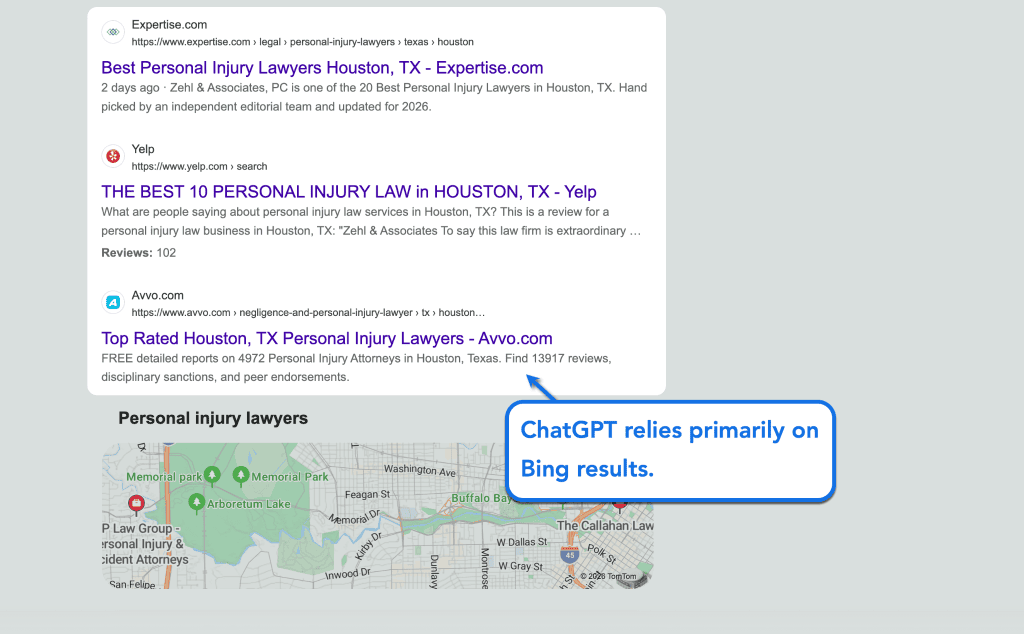
An important point about AI optimization: If you’re prioritizing ChatGPT, take note that it uses Microsoft Bing results as the primary search engine when scraping information.
One identifiable trend is ChatGPT’s reliance on listicles when curating lawyer recommendations. More specifically, list-based content that rounds up the “best” or “top” attorneys in a specific location.
Why is this important?
Because it points to the directories or “data sources” ChatGPT uses to formulate responses.
This is especially important for location-based and “near me” queries.
In general, you need consistent presence and entities in these sites for ChatGPT optimization:
- Avvo
- Yelp
- Expertise.com
- Lawful.com
- Super Lawyers
- Justia
- Lawyers.com
- Martindale
- Thumbtack
- Three Best Rated
Here’s a tip: Run a test query in ChatGPT f
Other Factors That Affect Transactional AI Optimization
Aside from citations by trusted AI information sources, here are other action recommendations that will help you connect with transactional-intent prospects through AI conversations:
- Highlight your experience: Highlight your verdicts, settlements, number of cases closed, accreditations (i.e., BBB), and other relevant milestones on your website. These are trust signals that ChatGPT uses to gauge your firm’s authority and success in the real world.
- Accumulate positive reviews: ChatGPT also looks at positive reviews sourced from reputable sites to determine your firm’s mention-worthiness. Apart from the review content itself, ChatGPT also looks at its recency (newer reviews hold more weight).
- Establish your presence on social media: ChatGPT also obtains information, audience sentiment data, and reviews from social media networks like LinkedIn and Facebook. Reviews and feedback on communities like Reddit also help build your authenticity.
Final Words
AI search is not the next stage of online research behavior.
We’re already there.
Overlooking AI optimization or underestimating its importance may cause you to miss out on a huge revenue stream.
The good news is, you already understand the fundamentals.
To optimize for ChatGPT (and other prominent AI tools), you need consistent entity strength, AI-optimized content, and an ongoing effort to grow your authority in your legal practice area.
It’s now just a matter of knowing your firm’s specific needs, recognizing opportunities, and taking them before your competitors do.
We can help you get ahead of the curve.
Reserve a free consultation here and develop an AI optimization game plan that’s specifically tailored to your firm.
Related Post
-

How to Use ChatGPT to Supercharge Your Legal Practice
ChatGPT is one of the breakthrough technologies in recent years. With more and more lawyers integrating AI into their workflows, any law firm should look…